Key Stories
Choosing Vitamin D Supplements
A good supplement should be easy to understand. You should be able to see what it contains, how much is in a serving and where the information comes from. A beautiful label is welcome, but it cannot answer those questions by itself.
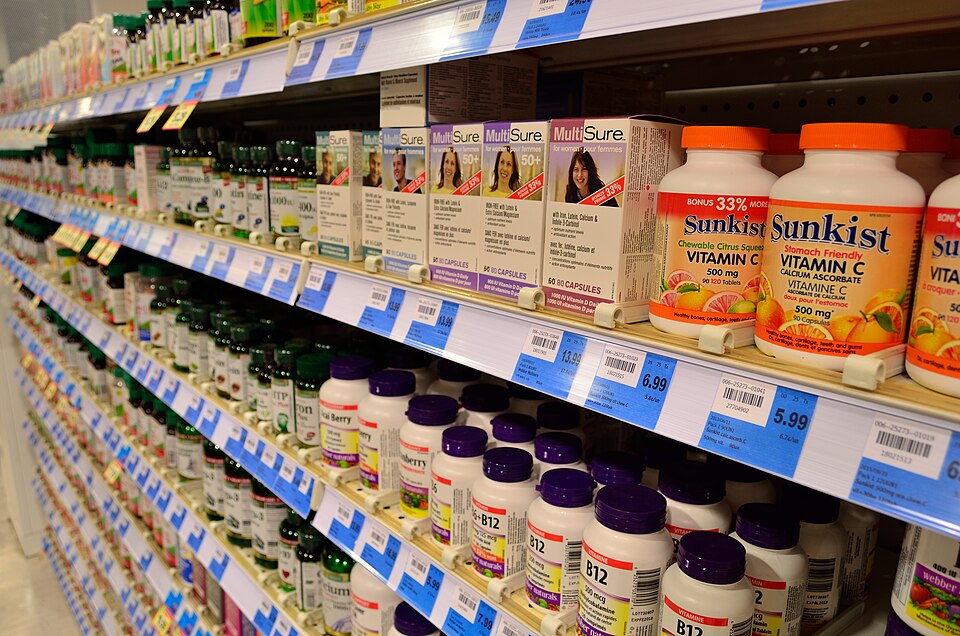

Image details
Illustrative photograph by Raysonho @ Open Grid Scheduler / Grid Engine, Wikimedia Commons. CC0. Image displayed to fit.A good supplement should be easy to understand. You should be able to see what it contains, how much is in a serving and where the information comes from. A beautiful label is welcome, but it cannot answer those questions by itself. Choosing well means looking beyond the largest number or the longest ingredients list. It also means being clear about what a test, certificate or study actually tells you about the product in your hand.
Start with the serving
Check whether the stated amount is for one tablet, several capsules or a measured quantity of liquid. Then look at the vitamin D form, other active ingredients and excipients. Similar-looking bottles can describe quite different daily amounts. An independent laboratory report can be valuable. Ask which batch was tested, when it was tested and what was measured. An ingredient identity check, a potency measurement and a contaminant screen are different pieces of information.
Separate a product from its ingredient
A study of vitamin D does not automatically prove that a particular brand has been tested, is absorbed in the same way or delivers the same outcome. Product analysis has found variation in stated potency. That supports asking for evidence, not assuming every bottle is unreliable. There is no single badge that answers every question. Useful comparisons make the dose, formulation, source information and limits of testing visible. A worldwide directory can make product comparison easier, without turning a listing into an endorsement.
Sources
National Institutes of Health, Dietary Supplement Label Database. Example NIH supplement label record. Accessed 15 November 2026.
Related reading
Vitamin D Tablets, Capsules and Softgels
A tablet, a hard capsule and a softgel can contain the same stated amount of vitamin D while looking completely different.
Read more →Key Stories
Explore vitamin D stories about everyday questions, supplements and health research.
Read more →Impact of a competency based curriculum on quality improvement among internal medicine residents
The main outcome measures included self-assessment, objective assessment using the Quality Improvement Knowledge Assessment Tool (QIKAT) scores to assess QI knowledge, and performance-based assessment via presentation of longitudinal QI projects.
Original paper ↗Read more →Education Before Supplementation
Learn why education should come before vitamin D supplementation.
Read more →Vitamin D: What It Is
Learn what vitamin D is, how it functions as a regulatory molecule, and why activation, signalling, and biological context matter more than simple measurements.
Read more →Original sources
Over-the-counter and compounded vitamin D: is potency what we expect?
Published in DOI: 10.1001/jamainternmed (2013).
Publication details
LeBlanc ES et al. 2013. JAMA internal medicine. 173(7):585-586. Over-the-counter and compounded vitamin D: is potency what we expect?. DOI: 10.1001/jamainternmed.2013.3812. PMID: 23400578.
Example NIH supplement label record
National Institutes of Health, Dietary Supplement Label Database.
Publication details
National Institutes of Health, Dietary Supplement Label Database. Example NIH supplement label record. Accessed 15 November 2026.