Key Stories
Too Much Vitamin D and Toxicity
Vitamin D toxicity is real, but the phrase is often used without explaining what happened. A high-strength product, a high blood result and a diagnosed toxic effect are not identical descriptions.
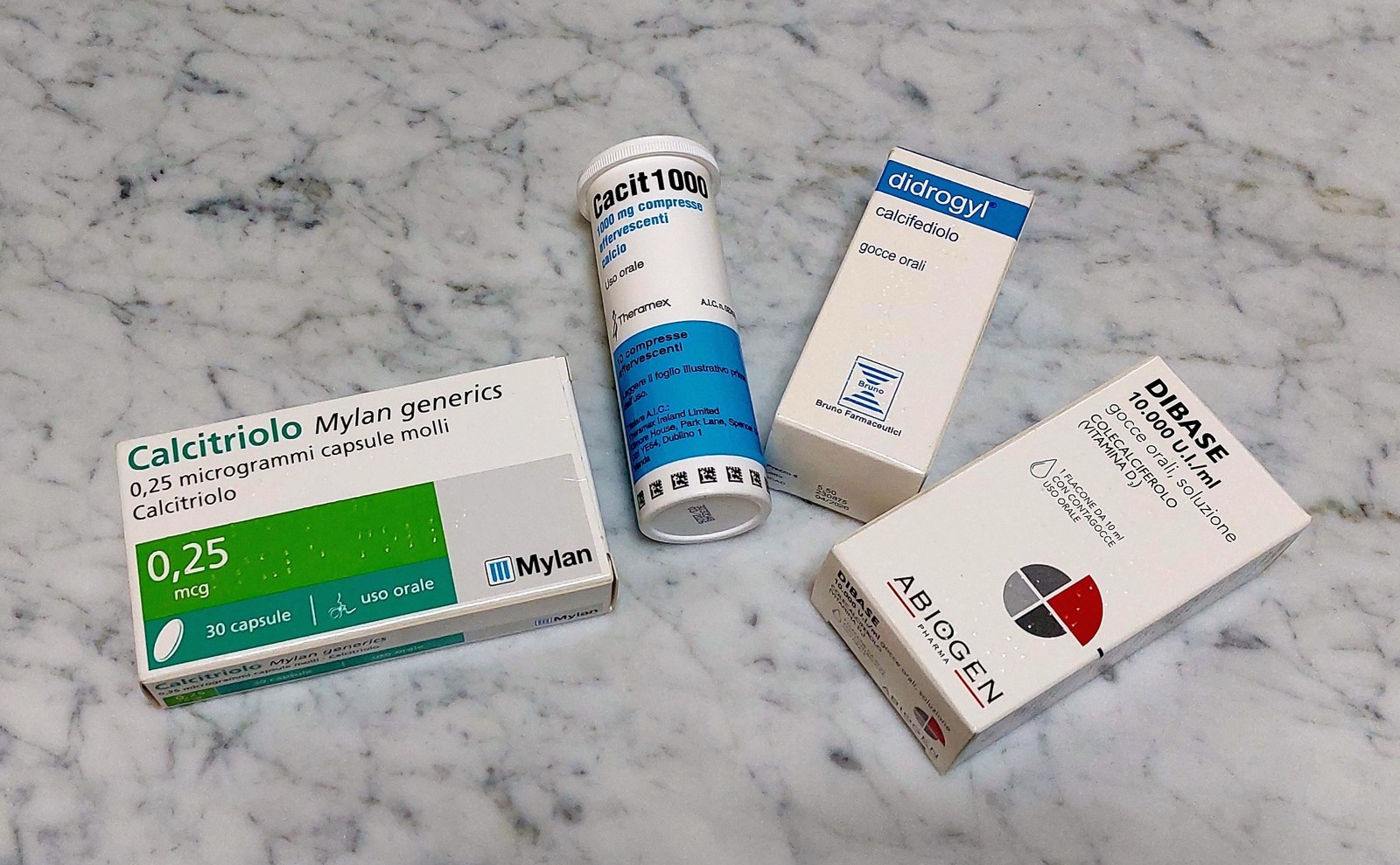

Image details
Illustrative photograph by Anna.Massini. CC BY-SA 4.0. Cropped to fit.Vitamin D toxicity is real, but the phrase is often used without explaining what happened. A high-strength product, a high blood result and a diagnosed toxic effect are not identical descriptions. A useful discussion should make excess exposure understandable without suggesting that ordinary nutritional use and severe dosing errors are the same situation.
Why calcium matters
Excess vitamin D can raise calcium in the blood. The resulting problems involve more than a vitamin D number being outside a preferred range. Clinical assessment considers the exposure, laboratory findings and the person’s condition together. A tolerable upper intake level is a population safety limit. It is not a recommended target, and crossing it does not mean that everyone becomes toxic at precisely the same point. Prescribed treatment has its own clinical context.
Read the whole dosing story
Duration and frequency matter. So do errors such as taking a weekly preparation daily or combining several sources without noticing. Product quality is another reason to distinguish what a label states from what a verified analysis establishes. The strongest explanations of toxicity describe dose, duration, calcium and clinical findings. They do not rely on a frightening number taken out of context. Vitamin D deserves the same care with labels and dosing instructions as any other active supplement. Familiarity is not a substitute for understanding the amount being taken.
High calcium can cause nausea, vomiting, constipation, marked thirst, more frequent urination, weakness or confusion. Persistent excess can damage the kidneys and heart. These symptoms have other possible causes too; they cannot diagnose toxicity by themselves. If you think you have taken too much vitamin D, especially with symptoms, contact a clinician or, in the UK, NHS 111 promptly. Keep the product packaging and dose details available.
Sources
National Institutes of Health, Office of Dietary Supplements. Vitamin D: Health Professional Fact Sheet. Accessed 15 November 2026.
NHS. How and when to take colecalciferol. Accessed 15 November 2026.
Related reading
Calcium Availability and Vitamin D Response in Nutritional Rickets: Full Study
How calcium availability shapes vitamin D response in nutritional rickets: treatment outcomes, absorption, skeletal recovery and the limits of blood targets.
Read more →Calcium Availability and Vitamin D Response in Nutritional Rickets: Study Summary
Understand the calcium and vitamin D rickets trial: who participated, how recovery was measured, the main findings and what they do not establish.
Read more →When Normal Blood Calcium Conceals a Skeletal Cost
Learn how mouse experiments separate preserved blood calcium from skeletal integrity, and partial mineral correction from whole-system recovery.
Read more →VDR, PDIA3 and Rapid Calcium Signalling in A431 Cells: Full Evidence Review
Examine minute-scale calcium responses and later reporter activity in A431 carcinoma cells, with limits on receptor dependence and clinical interpretation.
Read more →VDR, PDIA3 and Rapid Calcium Signalling in A431 Cells: Study Summary
Summary of rapid calcium and later reporter responses in A431 cells lacking VDR or PDIA3, separating observed changes from proposed pathway connections.
Read more →Vitamin A and the Calcium Response to Calcitriol: Full Study
close reading of a human vitamin A and calcitriol experiment, with receptor and fracture evidence explaining what the calcium response can establish.
Read more →Vitamin A and the Calcium Response to Calcitriol: Study Summary
What a nine-person crossover experiment found about vitamin A and calcitriol, why the calcium result matters, and why it cannot set supplement ratios.
Read more →Vitamin D and Calcium
Learn how vitamin D supports calcium regulation by influencing absorption, kidney handling, hormonal coordination, and wider physiological balance.
Read more →Vitamin D, Calcium, Phosphate and Skeletal Demands in Pregnancy: Full Evidence Review
Evidence on vitamin D, calcium absorption, phosphate regulation and maternal bone during pregnancy, with clear human and animal study limits.
Read more →Vitamin D, Calcium, Phosphate and Skeletal Demands in Pregnancy: Study Summary
Understand vitamin D, calcium, phosphate and bone in pregnancy.
Read more →Vitamin D and Calcium Physiology
Learn how vitamin D helps regulate calcium physiology, including absorption, bone mineralisation, kidney reabsorption, and hormone-driven feedback control.
Read more →Vitamin D-Induced Hypercalcaemia: Mechanisms of Calcium Dysregulation: Full Study
AA full evidence review of how excess vitamin D activity, extrarenal calcitriol production and impaired CYP24A1 clearance can cause hypercalcaemia.
Read more →Vitamin D-Induced Hypercalcaemia: Mechanisms of Calcium Dysregulation: Study Summary
A concise evidence summary of how vitamin D excess, excessive calcitriol production and impaired degradation can cause hypercalcaemia.
Read more →Vitamin D, Smooth-Muscle Calcium and Vascular Contraction: Full Study
Explore vitamin D, smooth-muscle calcium and arterial contraction through rat vessel and human placental-cell experiments, with methods and clear limits.
Read more →Vitamin D, Smooth-Muscle Calcium and Vascular Contraction: Study Summary
Understand what vitamin D experiments show about calcium signalling, arterial force and smooth-muscle contraction, and why these are not blood-pressure trials.
Read more →Vitamin D and Vitamin K in Calcium Handling, Bone and Vascular Physiology: Evidence Synthesis
Evidence synthesis integrating vitamin D, vitamin K-dependent proteins, calcium handling, bone outcomes and vascular calcification evidence.
Read more →Vitamin D, Vitamin K-Dependent Proteins and Calcium Handling: Full Study
Mechanistic evidence explaining how vitamin D influences calcium physiology while vitamin K activates osteocalcin and matrix Gla protein.
Read more →Vitamin D, Vitamin K-Dependent Proteins and Calcium Handling: Study Summary
A concise explanation of how vitamin D, osteocalcin, matrix Gla protein and vitamin K-dependent carboxylation interact in calcium physiology.
Read more →Why Vitamin D and Vitamin K Perform Different Jobs in Calcium Physiology
Why vitamin D and vitamin K interact in calcium physiology while performing different roles in absorption, protein expression and carboxylation.
Read more →Key Stories
Explore vitamin D stories about everyday questions, supplements and health research.
Read more →Can vitamin D cause nausea?
Vitamin D3 can cause nausea.
Read more →Original sources
Vitamin D: Health Professional Fact Sheet
National Institutes of Health, Office of Dietary Supplements.
Publication details
National Institutes of Health, Office of Dietary Supplements. Vitamin D: Health Professional Fact Sheet. Accessed 15 November 2026.
How and when to take colecalciferol
NHS. How and when to take colecalciferol.
Publication details
NHS. How and when to take colecalciferol. Accessed 15 November 2026.
Vitamin D Toxicity-A Clinical Perspective
Confusion, apathy, recurrent vomiting, abdominal pain, polyuria, polydipsia, and dehydration are the most often noted clinical symptoms of vitamin D toxicity (VDT; also called vitamin D intoxication or hypervitaminosis D).
Publication details
Marcinowska-Suchowierska E et al. 2018. Frontiers in endocrinology. 9:550. Vitamin D Toxicity-A Clinical Perspective. DOI: 10.3389/fendo.2018.00550. PMID: 30294301.