Key Stories
Vitamin D Tablets, Capsules and Softgels
A tablet, a hard capsule and a softgel can contain the same stated amount of vitamin D while looking completely different. The format affects convenience and ingredients, but appearance alone does not tell us which will work best.
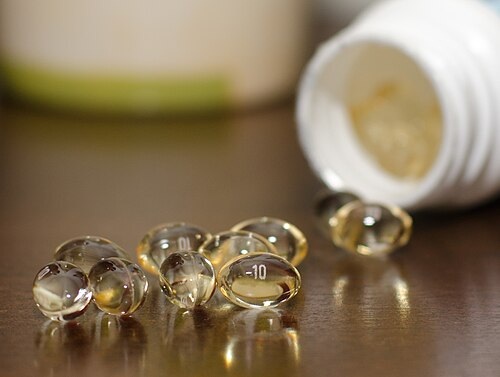

Image details
Illustrative photograph by Globallystoners. CC0. Cropped to fit.A tablet, a hard capsule and a softgel can contain the same stated amount of vitamin D while looking completely different. The format affects convenience and ingredients, but appearance alone does not tell us which will work best. It helps to begin with a practical question: can the preparation deliver the intended amount in a form the person can use consistently?
Read beyond the format name
A softgel may contain oil and an animal-derived shell. A tablet may use binders or coatings. Capsules can have different shell materials and fillers. These details matter for dietary preferences and tolerability, even when the headline vitamin amount is identical. Researchers can compare the circulating response after particular preparations. Those findings belong to the tested formulations and conditions. A result for one tablet cannot settle the performance of every tablet made by every manufacturer.
Practical differences still count
Swallowing, storage instructions, serving size and ease of remembering a dose all affect real use. There is little value in declaring a format superior if it makes the routine difficult or obscures the actual amount taken. The category on the bottle is one detail among several. Formulation, dose accuracy and the evidence for the actual preparation deserve closer attention. Compare complete products rather than formats in isolation. A straightforward label and a manageable routine are useful qualities that an impressive-looking capsule cannot replace.
Related reading
Fat-Soluble Vitamins and Intestinal Vitamin D Uptake: Full Study
Examine vitamin D uptake experiments involving vitamins A, E and K, alongside human meal studies that clarify the limits of absorption and timing claims.
Read more →Fat-Soluble Vitamins and Intestinal Vitamin D Uptake: Study Summary
A clear summary of intestinal vitamin interactions: what cell and mouse experiments found, how human meal studies compare, and what remains unproven.
Read more →Quantitative Analysis of the Vitamin D3 Content in Dietary Supplements Marketed in Hungary Using High-Performance Liquid Chromatography
This study aimed to assess public knowledge and preferences related to vitamin D3 supplementation and to evaluate the content accuracy and short-term stability of commonly used products.
Original paper ↗Read more →Sexual Function and Depressive Symptoms in Metformin-Treated Women with Drug-Induced Hyperprolactinemia and Different Vitamin D Status: A Pilot Study
Therefore, the present study aimed to examine whether vitamin D status modulates the effects of metformin, a medication with less pronounced prolactin-lowering properties, on sexual function and depressive symptoms.
Original paper ↗Read more →The effect of early postpartum vitamin d and e supplementation on uterine after pain: a double-blind randomized clinical trial
This study aimed to investigate whether early postpartum supplementation with vitamins D and E could reduce the intensity and duration of uterine after pain in multiparous women.
Original paper ↗Read more →How is vitamin D deficiency treated after a blood test?
What a low vitamin D result can mean, why treatment may involve a prescribed course and what happens after it ends.
Read more →Is it better to take vitamin D in the morning or at night?
There is no established best hour for taking vitamin D.
Read more →Choosing Vitamin D Supplements
A good supplement should be easy to understand.
Read more →Chinese medicine Gushukang capsule for treating primary osteoporosis: a systematic review and meta-analysis
The risk bias and quality of the trials included in the meta-analysis were evaluated with the Cochrane Collaboration’s risk assessment tool.
Original paper ↗Read more →Clinical value of Vitamin-D combined with budesonide/formoterol and theophylline sodium glycinate sustained-release tablets in the treatment of chronic obstructive pulmonary disease patients
To explore the clinical value of Vitamin-D combined with budesonide/formoterol (BF) and theophylline sodium glycinate (TSG) sustained-release tablets in the treatment of patients with chronic obstructive pulmonary disease (COPD).
Original paper ↗Read more →Treatment outcomes of fixed-dose combination versus separate tablet regimens in pulmonary tuberculosis patients with or without diabetes in Qatar
We aim to evaluate the safety and effectiveness of FDC and ST regimen for treating PTB, in addition to comparing safety and efficacy of FDC and ST regimens in patients with diabetes treated for TB.
Original paper ↗Read more →Use of Oral Vitamin-D Glass ampoule and tablet: Experience of patients and physicians
The participants were asked about injuries related to the use of glass ampoule, ease of using this from, after taste preference of tablet or injectable form as well as demography.
Original paper ↗Read more →Calcium Availability and Vitamin D Response in Nutritional Rickets: Study Summary
Understand the calcium and vitamin D rickets trial: who participated, how recovery was measured, the main findings and what they do not establish.
Read more →Vitamin D and Gut
Explore how vitamin D relates to gut regulation through barrier integrity, immune signalling, and whole-body physiological coordination.
Read more →Key Stories
Explore vitamin D stories about everyday questions, supplements and health research.
Read more →Education Before Supplementation
Learn why education should come before vitamin D supplementation.
Read more →Vitamin D: What It Is
Learn what vitamin D is, how it functions as a regulatory molecule, and why activation, signalling, and biological context matter more than simple measurements.
Read more →Original sources
Intestinal absorption of vitamin D: a systematic review
Silva MC et al. 2018.
Publication details
Silva MC et al. 2018. Nutrition reviews. 76(1):60-76. Intestinal absorption of vitamin D: a systematic review. DOI: 10.1093/nutrit/nux034. PMID: 29025082.
Bioequivalence Studies of Vitamin D Gummies and Tablets in Healthy Adults: Results of a Cross-Over Study
Wagner CL et al. 2019.
Publication details
Wagner CL et al. 2019. Nutrients. 11(5):E1023. Bioequivalence Studies of Vitamin D Gummies and Tablets in Healthy Adults: Results of a Cross-Over Study. DOI: 10.3390/nu11051023. PMID: 31067745.