Key Stories
Vitamin D and Immunity
Vitamin D has a role in immune biology. The difficulty is what happens when that fact becomes a much larger advertising promise about stopping infections.
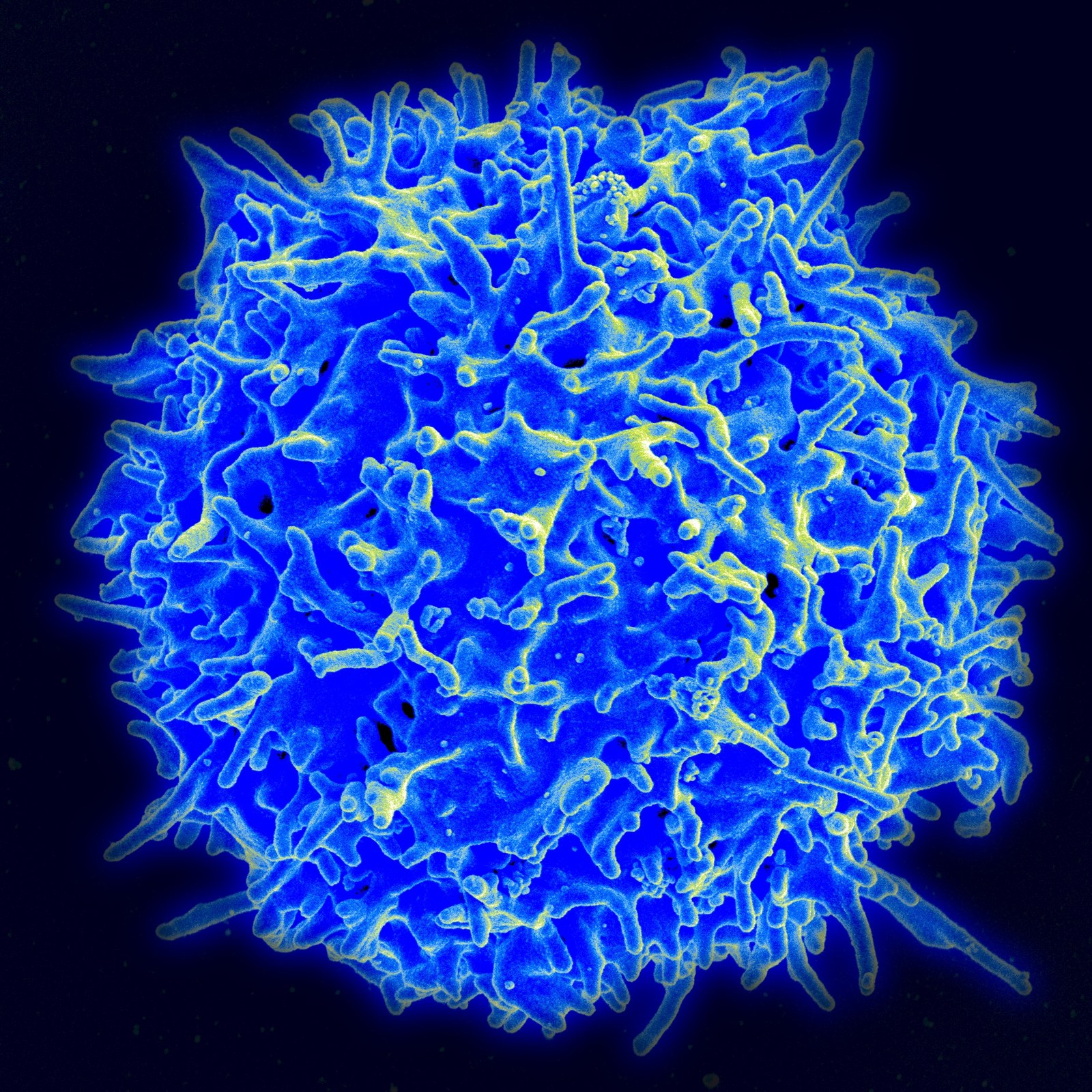

Image details
Illustrative photograph by NIAID/NIH. Public domain. Cropped to fit.Vitamin D has a role in immune biology. The difficulty is what happens when that fact becomes a much larger advertising promise about stopping infections. An immune cell responding in a laboratory gives researchers a reason to investigate. It does not tell us how often people will become ill, how severe their illness will be or whether a supplement changes either outcome.
Define the claim
‘Supports immunity’ can refer to normal nutrient function. ‘Prevents infection’ is a clinical claim requiring clinical evidence. The wording should show which meaning is intended instead of allowing the reader to infer the stronger one. Trials can count confirmed infections, symptom episodes, hospital admissions or other outcomes. These are different tests. A change in an immune marker does not automatically establish a reduction in illness.
Allow the answer to change
Reviews of respiratory-infection trials have been updated as more studies became available. The newer evidence is important even when it makes the earlier answer less certain. The updated 2025 review did not find a statistically significant reduction in acute respiratory infections overall. That result concerns the supplement regimens and infection outcomes studied; it does not contradict vitamin D’s normal biological role in immune cells. A balanced account should show that development rather than freeze the story at its most encouraging point. The biological role is established; additional protection from a particular supplement regimen needs outcome-specific evidence. The two should not be confused. Immunity is a serious research subject, not a single measurable benefit on a bottle. Clear questions make the discussion more useful and the claims easier to assess.
Sources
National Institutes of Health, Office of Dietary Supplements. Vitamin D: Health Professional Fact Sheet. Accessed 15 November 2026.
Related reading
Vitamin D supplementation to prevent acute respiratory tract infections: systematic review and meta-analysis of individual participant data: Full Evidence Review
Individual participant data meta-analysis examining vitamin D exposure and immune robustness under repeated respiratory infection stress.
Read more →Cost-utility of vitamin D supplementation to prevent acute respiratory infections in children
This study aimed to determine the cost-utility of vitamin D supplementation to prevent acute respiratory infections in pediatric patients.
Original paper ↗Read more →Association between micronutrient deficiency and acute respiratory infections in healthy adults: a systematic review of observational studies
Acute respiratory infections (ARI), including the common cold causes significant morbidity and economical losses globally.
Original paper ↗Read more →The effectiveness of interventions to reduce the transmission of acute respiratory infections in care homes: a systematic review
We conducted a systematic review of randomized controlled trials, to determine which interventions (apart from vaccines) are effective at reducing transmission of acute respiratory illnesses (ARIs) in care homes.
Original paper ↗Read more →Vitamin D, acute respiratory infections, and Covid-19: The curse of small-size randomised trials. A critical review with meta-analysis of randomised trials
Randomised trials conducted from 2006 to 2021 indicated that vitamin D supplementation (VDS) was able to prevent severe COVID-19 and acute respiratory infections (ARI).
Original paper ↗Read more →Vitamin D supplementation for prevention of acute respiratory infections in older adults: A systematic review and meta-analysis
Therefore, we systematically reviewed evidence from randomized controlled trials (RCTs) to evaluate the efficacy and safety of vitamin D supplementation in preventing ARIs in older adults.
Original paper ↗Read more →Vitamin D supplementation and resistance to acute respiratory infections (Martineau et al., 2017): Full Evidence Review
In-depth analysis of a large individual participant data meta-analysis examining vitamin D supplementation and resistance to acute respiratory infections across diverse populations.
Read more →A retrospective study of factors associated with treatment decision for nontuberculous mycobacterial lung disease in adults without altered systemic immunity
The primary objective was to identify the factors associated with anti-NTM treatment initiation.
Original paper ↗Read more →Chronic obstructive pulmonary disease reprograms the lung into an immune organ through trained immunity, cell death networks, and immune checkpoint dysregulation
Chronic obstructive pulmonary disease (COPD) is a heterogeneous inflammatory disorder characterized by persistent immune dysregulation and progressive structural deterioration of the lung.
Original paper ↗Read more →Effect of vitamin D3 supplementation on cellular immunity and inflammatory markers in COVID-19 patients admitted to the ICU
This study aimed to estimate the efficacy of vitamin D3 supplementation on cellular immunity and inflammatory markers in patients with COVID-19 admitted to the intensive care unit (ICU).
Original paper ↗Read more →Higher BCG‐induced trained immunity prevalence predicts protection from COVID‐19: Implications for ongoing BCG trials
Since the supposed protection being investigated could come from heterologous ‘trained immunity’ (TI) conferred by exposure to Mycobacterium spp.
Original paper ↗Read more →Vitamin D, infections and immunity
Vitamin D, best known for its role in skeletal health, has emerged as a key regulator of innate immune responses to microbial threat.
Original paper ↗Read more →Vitamin D influences gut microbiota and acetate production in zebrafish (Danio rerio) to promote intestinal immunity against invading pathogens
Further analysis uncovered that the abundance of the acetate-producer Cetobacterium in VD-deficient zebrafish was reduced compared to WT fish.
Original paper ↗Read more →Vitamin D regulates microbiome-dependent cancer immunity
A role for vitamin D in immune modulation and in cancer has been suggested.
Original paper ↗Read more →A mouse study prompts a question about vitamin D and tumour immunity
Atanas G. Atanasov highlighted the role of gut microbes in an experiment on how mice respond to tumours.
Read more →Vitamin D and Immunity
Explains how vitamin D supports immune regulation across innate and adaptive immunity, inflammatory balance, tolerance, immune memory, and barrier defence without claiming treatment effects.
Read more →Vitamin D Signalling Across Metabolism, Immunity and Endocrine Context: Full Evidence Review
An evidence synthesis separating local activation, receptor function and downstream responses across airway, skin, muscle and intestinal models.
Read more →Vitamin D Signalling Across Metabolism, Immunity and Endocrine Context: Study Summary
Summary of tissue-specific vitamin D signalling evidence, connecting local metabolism and receptor responses without assuming a shared clinical benefit.
Read more →From nutritional intervention to immune modulation: a multi-database bibliometric and topic modeling study of vitamin D in inflammatory bowel disease
Inflammatory bowel disease (IBD) is a chronic condition characterized by recurrent inflammatory episodes in the gastrointestinal tract.
Original paper ↗Read more →Impact of the COVID-19 pandemic on growth, nutrition and immune function in infants and toddlers
Pre-pandemic (2017 to 2018) and pandemic (2021 to 2023) cohorts were compared.
Original paper ↗Read more →Transcriptomic profiling of immune modulation induced by vitamin D3 in the VitDPAS and VitDHiD cohort studies
A comparative analysis with the VitDHiD study (NCT03537027), conducted on a Finnish cohort of 25 healthy participants, revealed 232 overlapping target genes, enabling an integrated assessment of vitamin D responsiveness across all 70 individuals.
Original paper ↗Read more →Original sources
Vitamin D supplementation to prevent acute respiratory infections: systematic review and meta-analysis of stratified aggregate data
Jolliffe DA et al. 2025.
Publication details
Jolliffe DA et al. 2025. The lancet. Diabetes & endocrinology. 13(4):307-320. Vitamin D supplementation to prevent acute respiratory infections: systematic review and meta-analysis of stratified aggregate data. DOI: 10.1016/s2213-8587(24)00348-6. PMID: 39993397.
Vitamin D: Health Professional Fact Sheet
National Institutes of Health, Office of Dietary Supplements.
Publication details
National Institutes of Health, Office of Dietary Supplements. Vitamin D: Health Professional Fact Sheet. Accessed 15 November 2026.