Key Stories
Vitamin D and Heart Health
Vitamin D and heart health are linked in a large body of research. The first question is whether a paper describes an association, a laboratory mechanism or the results of giving people a supplement.
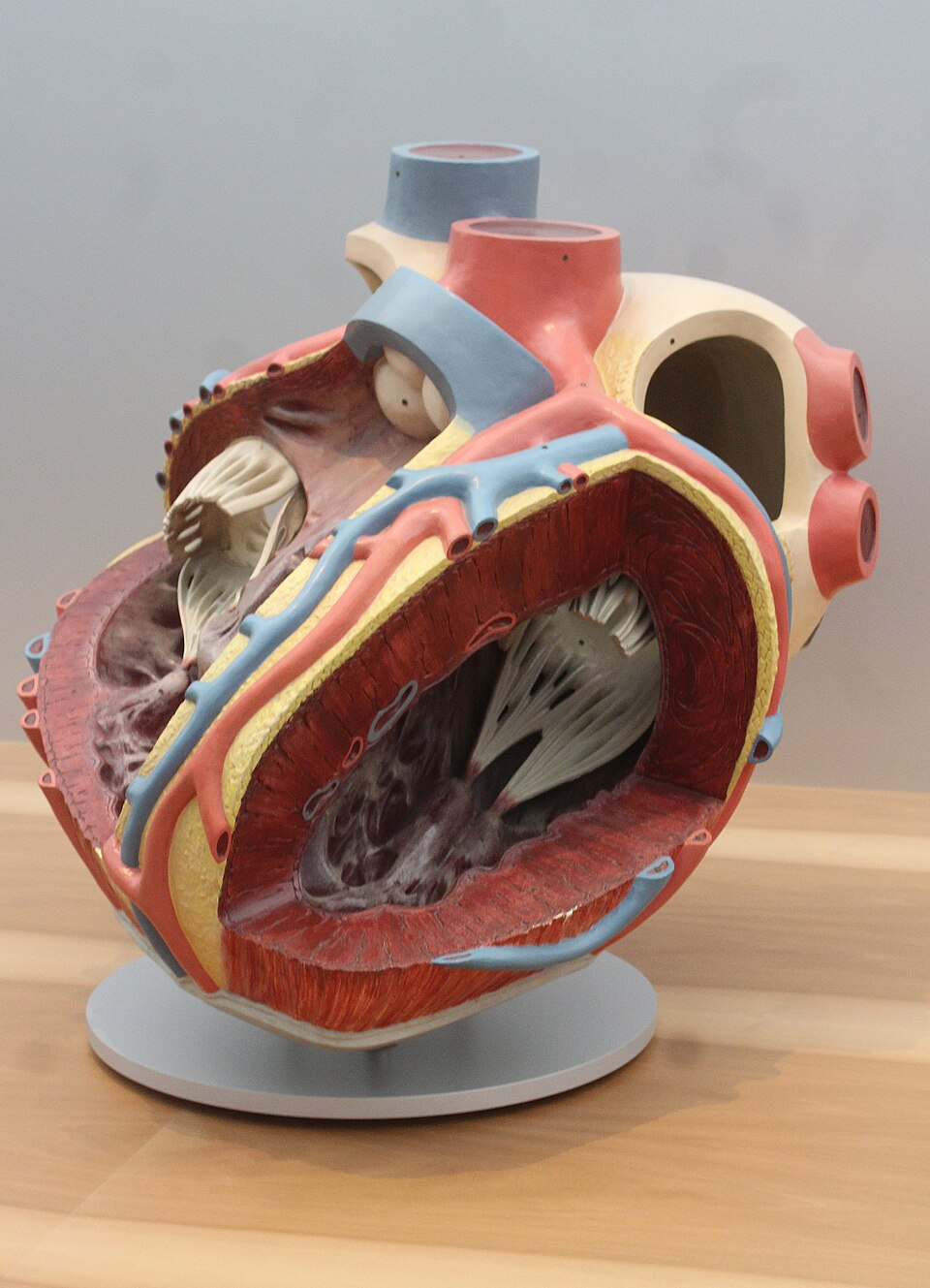

Vitamin D and heart health are linked in a large body of research. The first question is whether a paper describes an association, a laboratory mechanism or the results of giving people a supplement. Those forms of evidence can help each other, but they do not carry the same message. A lower blood level in people with heart disease does not, by itself, show that raising it prevents a heart attack.
Follow the evidence to actual events
VITAL did not find a significant reduction in its main cardiovascular outcome with vitamin D compared with placebo. The trial counted events rather than assuming that a change in a blood marker would translate into a clinical benefit. Results from a generally healthy prevention population should be described that way. They do not automatically settle treatment of a deficiency or every question about established cardiovascular disease. Equally, those distinctions should not be used to dismiss a substantial null result.
Be precise about smaller findings
Blood pressure, cholesterol and measures of vessel function can be useful research outcomes. If one changes, the article should say so without substituting the phrase ‘prevents heart disease’. That larger claim requires evidence at the level of disease outcomes. The biological and observational interest has not translated into a general cardiovascular-prevention benefit in VITAL. Heart-health coverage should explain the difference between a plausible mechanism and a demonstrated reduction in events. Readers should not have to discover that distinction in the small print.
Related reading
Association of 25-hydroxyvitamin D with HDL-cholesterol and other cardiovascular risk biomarkers in subjects with non-cardiac chest pain
Because vitamin D deficiency was considered as a possible modifiable cardiovascular risk factor, our aim was to investigate association between serum vitamin D and cardiovascular risk variables in subjects with NCCP.
Original paper ↗Read more →Improved HDL Cholesterol through Vitamin D Status Correction Substantially Lowers 10-Year Atherosclerotic Cardiovascular Disease Risk Score in Vitamin D-Deficient Arab Adults
This interventional study aimed to determine whether correcting vitamin D status in deficient Arab adults [25(OH)D.
Original paper ↗Read more →Age: and sex-matched comparison of diet quality in patients with heart failure to similarly aged healthy older adults
The HEI-2015 and macro: and micronutrient intakes of patients with HF were compared with healthy older adults (N 102; 55 to 92 years old; 53 % female).
Original paper ↗Read more →Associations of vitamin D with coronary revascularization and heart rate variability in hypertensive patients
We aimed to explore the connection between vitamin D levels with coronary revascularization and HRV in hypertensive patients.
Original paper ↗Read more →BMP signaling promotes zebrafish heart regeneration via alleviation of replication stress
In contrast to mammals, adult zebrafish achieve complete heart regeneration via proliferation of cardiomyocytes.
Original paper ↗Read more →Diabetes status-related differences in risk factors and mediators of heart failure in the general population: results from the MORGAM/BiomarCaRE consortium
Over a median follow-up of 13.8 years, a total of 652 (17.0%) and 5524 (6.1%) cases of incident heart failure were observed in participants with and without diabetes, respectively.
Original paper ↗Read more →Effects of vitamin D supplementation on inflammatory markers in heart failure: a systematic review and meta-analysis of randomized controlled trials
In meta-analyses, vitamin D-supplemented groups had lower concentrations of tumor necrosis factor-alpha (TNF-α) at follow-up compared with controls (n = 380; p = 0.04).
Original paper ↗Read more →Interactions between vitamin D receptor (VDR) gene and Interleukin-6 gene and environment factors on coronary heart disease risk in a Chinese Han population
Stratified analysis for gene: smoking interaction was investigated by logistic regression.
Original paper ↗Read more →Knowledge and attitudes about vitamin D, and behaviors related to vitamin D in adults with and without coronary heart disease in Saudi Arabia
Therefore, the current study aimed to investigate whether knowledge, attitudes and behaviors related to vitamin D contribute to the prevalence of vitamin D deficiency among adults with and without CHD in Saudi Arabia.
Original paper ↗Read more →Maternal micronutrient deficiency and congenital heart disease risk: A systematic review of observational studies
We aimed to investigate whether maternal micronutrient deficiencies increase the risk of fetal CHD through systematic review of published literature.
Original paper ↗Read more →Plant-Based No Added Fat or American Heart Association Diets, Impact on Cardiovascular Risk in Obese Hypercholesterolemic Children and Their Parents
To perform a randomized trial to determine if there is cardiovascular disease (CVD) risk reduction from a plant-based no added fat diet (PB) and the American Heart Association Diet (AHA) in children.
Original paper ↗Read more →Serum free 25(OH)D concentrations and cardiovascular disease, heart failure, kidney function decline, and fracture: the health, aging, and body composition study
We evaluated the relationship of free vitamin D with incident cardiovascular disease (CVD), heart failure (HF), kidney function decline (KFD) and fracture, among 786 participants in the Health Aging and body composition study.
Original paper ↗Read more →The impact of psychosocial factors on secondary hyperparathyroidism and vitamin D deficiency in adults with congenital heart disease: the CHD-HYPER study
Predictors of sHPT and vitamin D deficiency were evaluated using multivariate regression models.
Original paper ↗Read more →Vitamin D and Cardiovascular Disease, with Emphasis on Hypertension, Atherosclerosis, and Heart Failure
In this review, we aim to highlight our current understanding of the role of vitamin D in the cardiovascular system and to find potential explanations for the large discrepancies between the outcome of experimental studies and clinical intervention trials.
Original paper ↗Read more →Australian trial examines heart events during vitamin D supplementation
The Guardian reported on a large Australian trial whose combined cardiovascular finding remained statistically uncertain.
Read more →Danish trial finds slower calcium build-up on heart scans with vitamins K2 and D3
Patients with substantial calcium deposits in their coronary arteries had a smaller average increase on scans after two years of combined supplementation.
Read more →Vitamin D and Heart
How vitamin D relates to heart and cardiovascular function through vascular tone, endothelial behaviour, cardiac signalling, circulatory balance, and whole-system regulation.
Read more →Multivitamins in the prevention of cancer and cardiovascular disease: the COcoa Supplement and Multivitamin Outcomes Study (COSMOS) randomized clinical trial
The study objective was to determine if a daily MVM decreases total invasive cancer among older adults.
Original paper ↗Read more →Serum calcium and 25-hydroxyvitamin D in relation to longevity, cardiovascular disease and cancer: a Mendelian randomization study
Associations of serum calcium (S-Ca) and 25-hydroxyvitamin D (S-25(OH)D) concentrations with longevity, cardiovascular disease, and cancer are not clear.
Original paper ↗Read more →The Biological Activities of Vitamin D and Its Receptor in Relation to Calcium and Bone Homeostasis, Cancer, Immune and Cardiovascular Systems, Skin Biology, and Oral Health
1,25(OH)2D, the biologically active form of vitamin D, exerts most of its functions through the almost universally distributed nuclear vitamin D receptor (VDR).
Original paper ↗Read more →Vitamin D supplementation and prevention of cardiovascular disease and cancer in the Finnish Vitamin D Trial: a randomized controlled trial
The study was a 5-year, randomized, placebo-controlled trial among 2495 male participants ≥60 years and post-menopausal female participants ≥65 years from a general Finnish population who were free of prior CVD or cancer.
Original paper ↗Read more →Original sources
Vitamin D Supplements and Prevention of Cancer and Cardiovascular Disease
Manson JE et al. 2019.
Publication details
Manson JE et al. 2019. The New England journal of medicine. 380(1):33-44. Vitamin D Supplements and Prevention of Cancer and Cardiovascular Disease. DOI: 10.1056/nejmoa1809944. PMID: 30415629.
Principal results of the VITamin D and OmegA-3 TriaL (VITAL) and updated meta-analyses of relevant vitamin D trials
Published in DOI: 10.1016/j.jsbmb (2019).
Publication details
Manson JE et al. 2020. The Journal of steroid biochemistry and molecular biology. 198:105522. Principal results of the VITamin D and OmegA-3 TriaL (VITAL) and updated meta-analyses of relevant vitamin D trials. DOI: 10.1016/j.jsbmb.2019.105522. PMID: 31733345.