Key Stories
Vitamin D, Dementia and Cognition
The possibility of reducing dementia risk deserves serious attention. It also deserves language that does not offer families a certainty the research has not earned.
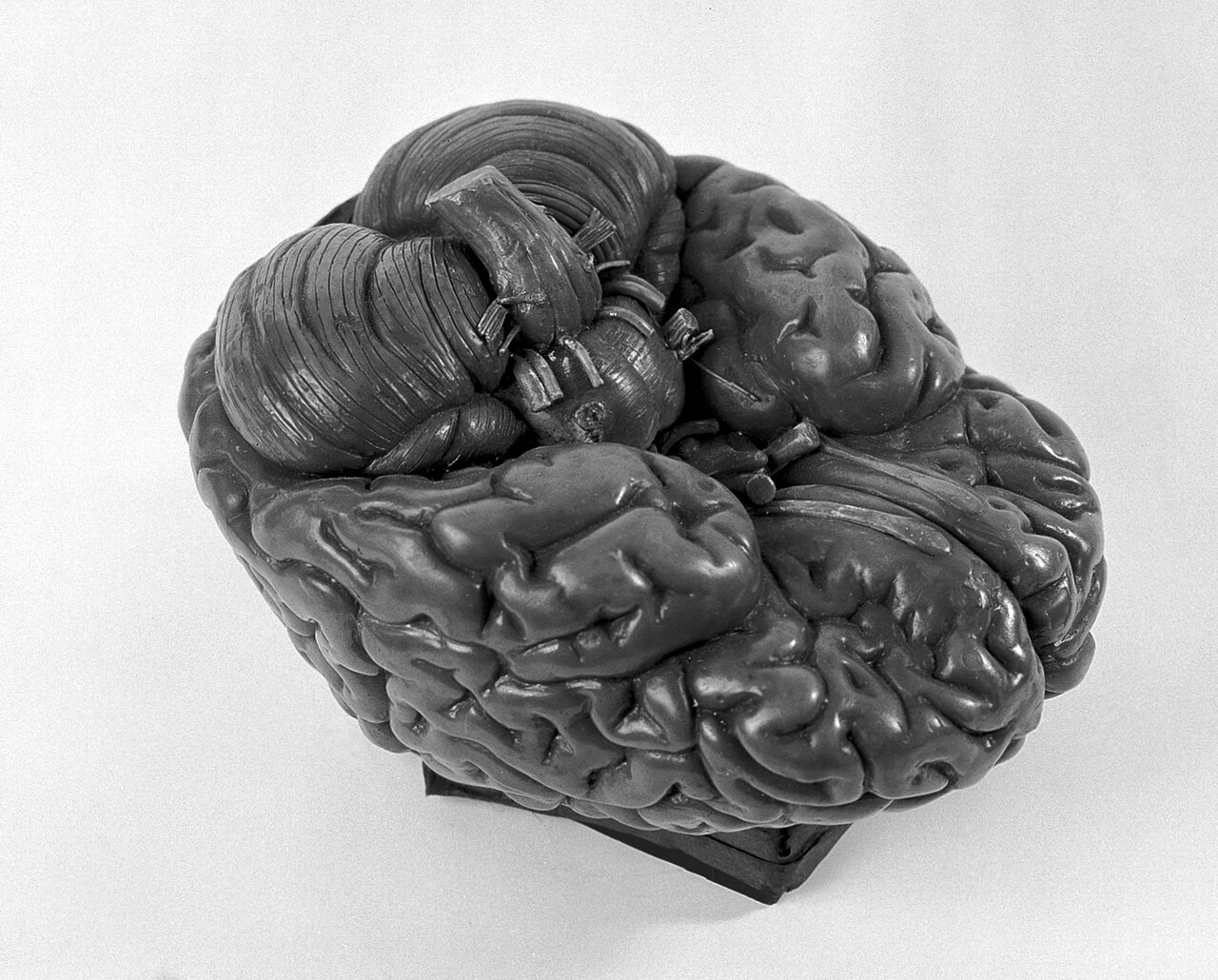

Image details
Illustrative photograph: Wellcome Images / Wellcome Collection, via Wikimedia Commons. CC BY 4.0. Image displayed to fit.The possibility of reducing dementia risk deserves serious attention. It also deserves language that does not offer families a certainty the research has not earned. Vitamin D studies can concern thinking-test performance, early cognitive difficulties or a later dementia diagnosis. These are related, but they are different outcomes.
What recent trials add
The VitaMIND trial studied older adults with mild to moderate vitamin D deficiency and early cognitive impairment. It did not find a measurable cognitive benefit from supplementation over its follow-up. That is a more specific answer than an observational association can provide. The Finnish Vitamin D Trial did not show a significant reduction in diagnosed dementia in its largely vitamin D-sufficient older population. The study context matters, including starting levels and the number of dementia events.
Why association remains difficult
Changes in diet, mobility, general health and time outdoors can accompany cognitive decline. A low level measured during that process may not identify which change came first. It is one reason an observational link cannot be treated as proof of prevention. Recent trials have not supplied a simple cognitive-improvement or dementia-prevention promise. They narrow the questions that still need answering. Keep prevention, early impairment and established dementia separate. The discussion should give people understandable evidence without suggesting that one nutrient explains a complex condition.
Related reading
Vitamin D Deficiency in Institutionalized Older Adults: Associations with Supplementation Practices but Not with Cognitive Decline or Dementia
Background/Objectives: Population aging has been accompanied by increased institutionalization of older adults and a high prevalence of vitamin D deficiency in this group.
Original paper ↗Read more →Prospective longitudinal study of frailty transitions in a community-dwelling cohort of older adults with cognitive impairment
We thus aim to study frailty transitions and change in cognitive status over 1-year follow-up among subjects with cognitive impairment attending a tertiary Memory Clinic.
Original paper ↗Read more →Association between air pollution and lifestyle with the risk of developing mild cognitive impairment and dementia in individuals with cardiometabolic diseases
Lifestyle factors and ambient air pollution are linked to dementia and CMDs, yet few studies have investigated their impact on dementia risk in CMDs patients at the same time.
Original paper ↗Read more →Association of dietary and nutritional factors with cognitive decline, dementia, and depressive symptomatology in older individuals according to a neurogenesis-centred biological susceptibility to brain ageing
Hippocampal neurogenesis (HN) occurs throughout the life course and is important for memory and mood.
Original paper ↗Read more →Cross-sectional associations of plasma vitamin D with cerebral β-amyloid in older adults at risk of dementia
Participants were 178 dementia-free individuals aged 70 years or older with data on plasma 25(OH)D and cerebral Aβ load assessed by [18F]-florbetapir positron emission tomography.
Original paper ↗Read more →Diversity and inclusivity in Australian dementia prevention research: A mixed methods review
Using co‐creation methodologies, the workshop aimed to generate consensus‐based recommendations for governments, institutions, and individual researchers to improve inclusivity and representativeness in future dementia prevention research.
Original paper ↗Read more →Habitual glucosamine use, APOE genotypes, and risk of incident cause-specific dementia in the older population
We aimed to evaluate the longitudinal association between habitual glucosamine supplement and the risk of cause-specific dementia and examine the possible effect modifiers on this association.
Original paper ↗Read more →Vitamin D Status, Cognitive Decline and Dementia Associations: Full Study
Assess associations of vitamin D status with memory, executive decline and dementia, alongside trial findings and the limits of causal interpretation.
Read more →Vitamin D Status, Cognitive Decline and Dementia Associations: Study Summary
A clear summary of vitamin D status and cognitive outcomes, covering memory, executive function, dementia associations and what supplementation trials found.
Read more →Amelioration of cognitive impairments in APPswe/PS1dE9 mice is associated with metabolites alteration induced by total salvianolic acid
The main objective of this study was to investigate the metabolic changes in 7-month-old APPswe/PS1dE9 mice treated with TSA, which protects against learning and memory impairment.
Original paper ↗Read more →Comparative assessment of cognitive impairment and oxidative stress markers among vitamin D insufficient elderly patients with and without type 2 diabetes mellitus (T2DM)
Participants were divided into different groups based on (a) vitamin D insufficiency and sufficiency; (b) diabetic and non-diabetic with and without cognitive impairment.
Original paper ↗Read more →Could olfactory identification be a prognostic factor in detecting cognitive impairment risk in the elderly?
The participants were divided into groups based on their cutoff scores of previous scientific reports about the Spanish version of Montreal Cognitive Assessment.
Original paper ↗Read more →Dietary vitamin D intake and 2-year changes in cognitive function in older adults with overweight or obesity and metabolic syndrome
We aimed to evaluate the association between dietary vitamin D intake and 2-year cognitive changes in older adults at risk of cognitive decline.
Original paper ↗Read more →Factors associated with cognitive function outcomes among older adults in Kuwait: A cross-sectional study
A normal MMSE score was reported for 51.0% (n = 129) of the sample, with 34.7% and 14.2% of participants having mild and moderate/severe cognitive impairment, respectively.
Original paper ↗Read more →Fibroblast growth factor 23 and cognitive impairment: The health, aging, and body composition study
Concentrations of fibroblast growth factor 23 (FGF-23), a hormone that regulates phosphorus and vitamin D metabolism, increase as kidney function declines.
Original paper ↗Read more →Interaction between ω-6 fatty acids intake and blood cadmium on the risk of low cognitive performance in older adults from National Health and Nutrition Examination Survey (NHANES) 2011 to 2014
This study evaluated the interaction effect between blood cadmium and ω-6 fatty acids intake on low cognitive performance in Americans.
Original paper ↗Read more →Low vitamin D levels are associated with cognitive impairment in patients with Hashimoto thyroiditis
We examined the association of vitamin D levels with cognitive impairment in patients with HT.
Original paper ↗Read more →Nutritional modulation of neuroinflammation in Alzheimer’s disease and mild cognitive impairment: a systematic review of clinical and preclinical evidence
This systematic review evaluated the clinical and preclinical evidence regarding the effects of nutritional interventions on neuroinflammatory mechanisms relevant to AD and MCI.
Original paper ↗Read more →Prediction model for cognitive impairment in maintenance hemodialysis patients: the role of diabetes
The aim of this study was to identify risk factors for cognitive impairment (CI) in maintenance hemodialysis (MHD) patients and to develop a predictive model.
Original paper ↗Read more →Serum 25-hydroxyvitamin D and cognitive decline in the very old: the Newcastle 85+ Study
Studies investigating the association between 25-hydroxyvitamin D [25(OH)D] and cognition in the very old (85+) are lacking.
Original paper ↗Read more →Serum 25(OH)D3 level is associated with cognitive impairment in middle-aged and elderly patients with type 2 diabetes mellitus
This study aimed to investigate the association between serum 25-hydroxyvitamin D3 (25(OH)D3) levels and cognitive impairment (CI) in middle-aged and elderly individuals with type 2 diabetes mellitus (T2DM).
Original paper ↗Read more →Original sources
Impact of Vitamin D Supplementation on Cognition in Adults With Mild to Moderate Vitamin D Deficiency: Outcomes From the VitaMIND Randomized Controlled Trial
Published in DOI: 10.1016/j.jamda (2025).
Publication details
Corbett A et al. 2025. Journal of the American Medical Directors Association. 26(8):105711. Impact of Vitamin D Supplementation on Cognition in Adults With Mild to Moderate Vitamin D Deficiency: Outcomes From the VitaMIND Randomized Controlled Trial. DOI: 10.1016/j.jamda.2025.105711. PMID: 40480279.
The Effect of Vitamin D3 Supplementation on the Incidence of Diagnosed Dementia Among Healthy Older Adults-The Finnish Vitamin D Trial
Lönnroos E et al. 2025.
Publication details
Lönnroos E et al. 2025. The journals of gerontology. Series A, Biological sciences and medical sciences. 80(7):glaf077. The Effect of Vitamin D3 Supplementation on the Incidence of Diagnosed Dementia Among Healthy Older Adults-The Finnish Vitamin D Trial. DOI: 10.1093/gerona/glaf077. PMID: 40243375.