
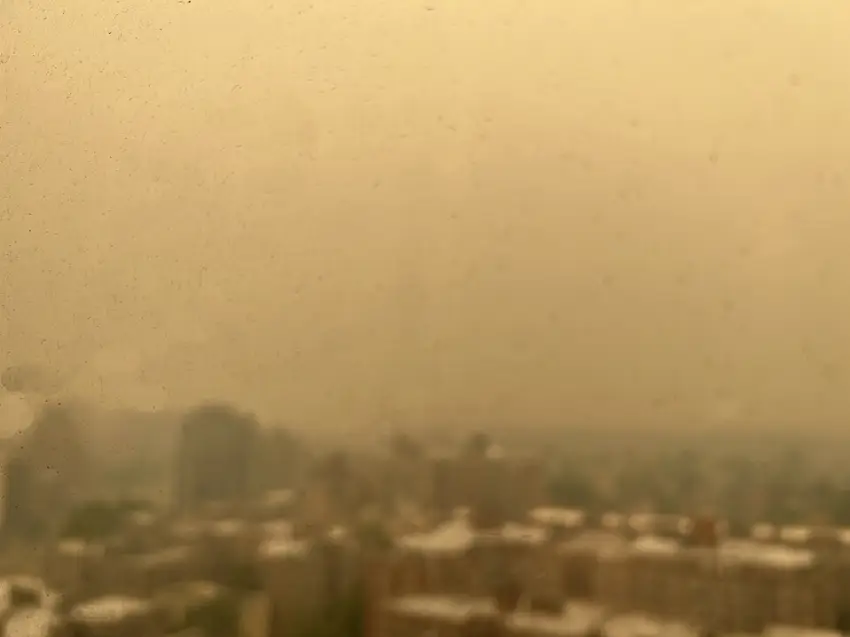

Yes. Even on a bright day, polluted city air can reduce the amount of ultraviolet B that reaches your skin. Ultraviolet B, or UVB, is the part of sunlight that starts vitamin D production in the skin.
Some particles and gases in polluted air absorb or scatter UVB before it reaches the ground. That need not make the day look much darker: your eyes detect visible light, not UVB, so brightness alone is a poor guide to how much UVB gets through.
Pollution is only one part of the picture. The season and how far you are from the equator also affect how much UVB reaches the ground. At street level, shade from buildings can further limit how much reaches your skin.
A brief drop in UVB during a pollution episode may make little difference to vitamin D production over time. If pollution persists for weeks or months, small reductions in UVB can add up to fewer opportunities for the skin to make vitamin D.
Commentary
Why does pollution reduce UVB more on some days than others?
The mix and amount of pollutants vary, and the weather affects whether they disperse. In winter, when the low sun already limits UVB, a layer of warmer air above cooler air can trap pollution near the ground. In summer, ozone and haze can still reduce UVB despite the longer daylight hours.
Can poor air quality reduce UVB exposure even if outdoor UVB changes little?
Yes. When the air quality is poor, people may cut a walk short or spend more of the day indoors. Less time outside can mean less UVB reaches their skin, even if the amount available outdoors barely changes.
Why can two places at the same latitude get different amounts of UVB?
Local pollution and airflow can differ. Where the air carries pollutants away, more UVB may reach the ground than where haze lingers. Elevation can matter too: at a higher site, sunlight passes through less air, so more UVB may get through.
Can haze and tall buildings combine to reduce UVB on the same street?
Yes. Haze can absorb or scatter some of the incoming UVB. On a narrow street, tall buildings also block part of the sky and cast shade, so less of the UVB that gets through the haze may reach someone on the pavement.
Why might two people in the same polluted city get different amounts of UVB?
Someone who works and travels mostly indoors may get less UVB than someone who spends more of the day outside. Even if both spend the same time outdoors, one may walk along a shaded route while the other takes a more open one.
Does polluted air mean your vitamin D level is low?
Not necessarily. Less UVB means less opportunity for your skin to make vitamin D, but air quality alone does not tell you your vitamin D level. Diet, supplements, differences in skin and daily habits also play a part.
Does pollution directly change how the skin makes vitamin D?
Pollution can reduce the UVB that reaches your skin, leaving fewer opportunities for it to make vitamin D. This filtering changes how much UVB arrives, not how your skin responds to the UVB that reaches it.