
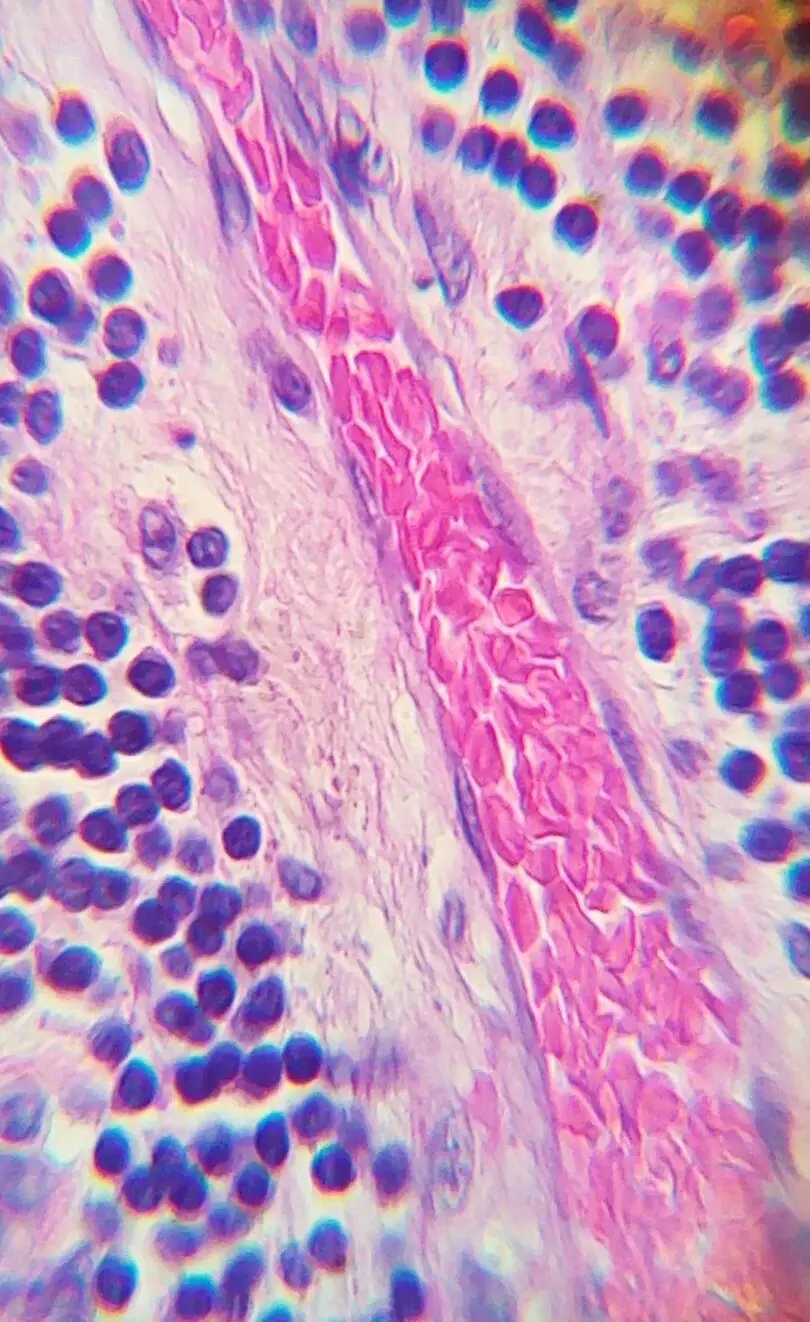

A blood-vessel lining can signal nearby muscle to relax by releasing nitric oxide, but the muscle must respond for its force to change. The lining releases signals; the surrounding smooth-muscle cells change the force they generate.
Nitric oxide can act on nearby smooth muscle through cyclic GMP, a messenger inside the muscle cell. Relaxation can involve less calcium being available inside the cell, or the contractile machinery generating less force at the same calcium level. These are different routes: calcium availability describes how much is present, while calcium sensitivity describes how strongly the machinery responds to it.
In an arterial-muscle experiment, nitric-oxide-donor relaxation was linked with cyclic GMP, changes in myosin phosphorylation and phosphatase activity. Myosin is a contractile protein; phosphorylation adds phosphate groups to a protein, while phosphatase activity removes them. This is general mechanism research, not a vitamin D experiment.
Dreyer’s small exploratory, double-blind randomised trial involved people with chronic kidney disease and vitamin D deficiency. It measured stimulated skin microcirculatory responses: the response to acetylcholine improved, while sodium nitroprusside showed no significant treatment effect. This difference can help locate where a response changed, but it does not identify the molecular step or prove a complete chain from vitamin D to muscle relaxation or a blood-pressure effect.
Commentary
What happens inside the muscle after it receives the nitric oxide signal?
Nitric oxide can act through cyclic GMP, an internal messenger in the muscle cell. Arterial-muscle research linked nitric-oxide-donor relaxation with changes in myosin phosphorylation and phosphatase activity. These relate to the contractile machinery, but this general mechanism does not establish a vitamin D effect.
Can smooth muscle relax without less calcium being available inside the cell?
Yes. Relaxation can involve less calcium being available, or the contractile machinery generating less force at the same calcium level. Calcium availability and calcium sensitivity describe different parts of the process.
Does less leakage through the vessel lining mean the muscle relaxed?
No. Leakage describes how readily material crosses the lining. Relaxation describes a change in the force generated by the surrounding muscle, so the two require separate evidence.
What did the vitamin D2 trial’s acetylcholine and nitroprusside comparison show?
In Dreyer’s small exploratory trial in people with chronic kidney disease and vitamin D deficiency, the stimulated skin microcirculatory response to acetylcholine improved, while sodium nitroprusside showed no significant treatment effect. This selective pattern does not identify the molecular step or prove a full causal chain.