
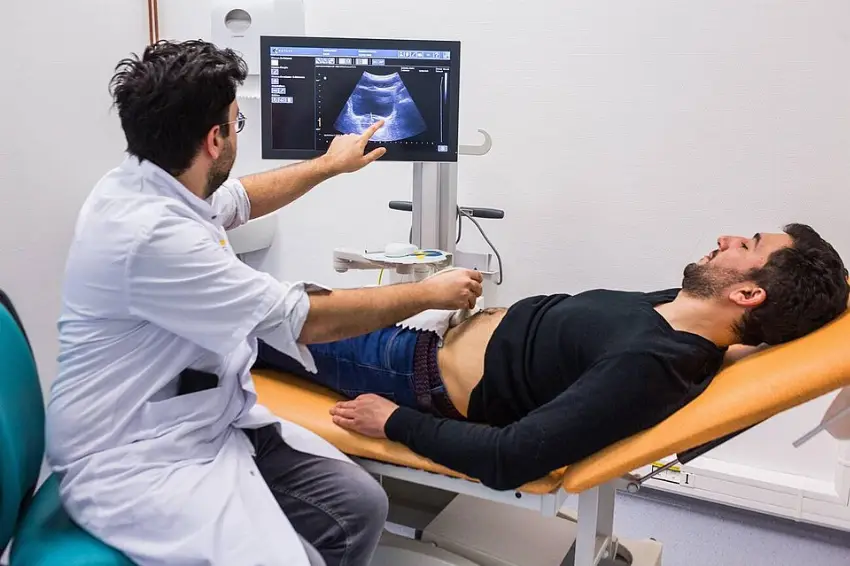

This study did not establish whether a vitamin D blood test can predict an individual muscle ultrasound result. Among 141 adults, those with higher blood levels of 25-hydroxyvitamin D, the usual marker of vitamin D status, tended to have higher vascular-index values in three muscles.
The researchers compared blood levels with ultrasound results at one point; they did not assign vitamin D treatment. The vascular index was the proportion of ultrasound-image pixels displaying a colour flow signal.
A higher index meant that a larger share of the image showed a signal, not that the researchers had measured how much blood flowed through the muscle each minute. The index did not measure oxygen delivery or count capillaries. The association described how blood results and image signals varied together, without establishing whether a blood result could predict the signal on one person’s scan.
The groups differed in age. The authors reported an association after accounting for other factors, but gave too little numerical detail to show how much the scan signal differed after adjustment. They did not include sun exposure or physical activity in that adjustment, so other explanations for the association remain possible.
Commentary
How can the link be strong without predicting one person’s scan?
The very strong correlation describes a pattern across the 141 adults: higher vitamin D levels generally went with higher ultrasound signals. It does not say what range of scan values to expect at a particular vitamin D level. The study provided no validated estimate for an individual scan.
Were people moving when the ultrasound signal was measured?
The researchers measured the signal in resting muscle, not during exercise. A higher signal at rest does not establish better exercise performance.
How widely can this finding be applied?
The researchers examined 141 adults at one centre. The finding describes those adults; whether the same relationship holds in other populations remains uncertain.