Key Stories
Higher-Dose Vitamin D Supplements
A higher dose is easy to mistake for a stronger promise. Supplement shelves encourage the comparison: more IU, more potency, perhaps more benefit. The last step in that argument needs evidence.
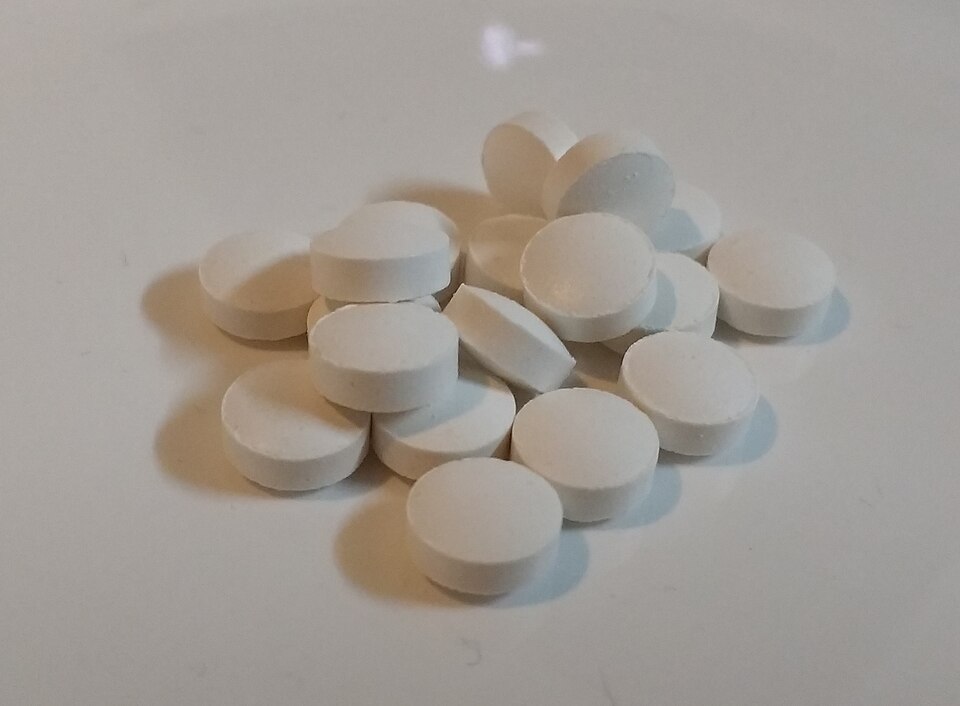

Image details
Illustrative photograph by Mx. Granger, Wikimedia Commons. CC0. Image displayed to fit.A higher dose is easy to mistake for a stronger promise. Supplement shelves encourage the comparison: more IU, more potency, perhaps more benefit. The last step in that argument needs evidence. Higher-dose vitamin D has been studied and is used in some clinical settings. That does not make every high-dose bottle a suitable everyday choice.
Ask why the higher amount is being used
Replacing a documented shortage is different from long-term disease prevention. A short prescribed course is also different from taking the same amount indefinitely. The label cannot tell you which situation applies. A higher dose may produce a larger change in a measurement without improving the outcome someone cares about. Trials need to examine both benefits and adverse effects. The absence of an immediate symptom does not establish that a long-term regimen is appropriate.
Do not hide schedule inside dose
In a double-blind trial involving 2,256 women aged 70 or older, a single 500,000 IU dose each year increased falls and fractures compared with placebo during three to five years of follow-up. This was a large annual dose in a particular older population. It does not show that every prescribed replacement course or smaller regular dose has the same risk. It does show why a larger number on the bottle cannot be assumed to mean better protection. More vitamin D does not automatically produce more benefit. Dose, duration, frequency and the population studied all belong in the explanation. The useful question is what justifies the higher dose in this situation. A large number on a label is the beginning of that question, not the answer.
Sources
NHS. How and when to take colecalciferol. Accessed 15 November 2026.
Related reading
Bone Mineralisation, Turnover and Fractures Measure Different Outcomes
Understand what bone mineralisation, resorption markers and fractures measure, using vitamin D experiments and the VITAL trial as distinct examples.
Read more →How to Interpret Vitamin D, Muscle Strength and Falls
A guide to reading muscle mechanisms, performance tests and fall trials without confusing receptor biology with supplement efficacy.
Read more →Vitamin D and Bone: Mineralisation, Cell Signalling and Fractures: Full Study
Compare bone mineralisation and cell-signalling experiments with VITAL fracture results, keeping doses, models and clinical limits distinct.
Read more →Vitamin D and Bone: Mineralisation, Cell Signalling and Fractures: Study Summary
A short summary of vitamin D bone-cell and mineral-regulation studies alongside the VITAL fracture trial and its population limits.
Read more →Vitamin D, Physical Performance and Falls: Full Evidence Review
D-Vitaal and D-Health tested physical performance and falls.
Read more →Vitamin D, Physical Performance and Falls: Study Summary
Summary of D-Vitaal and D-Health findings on physical performance and falls, including population differences, null results and subgroup uncertainty.
Read more →Vitamin D and Bone
Learn how vitamin D supports bone through calcium and phosphate regulation, tissue repair, muscle: bone interaction, kidney signalling, and long-term skeletal resilience.
Read more →What Immune-Ageing Measurements Can and Cannot Tell Us
A guide to immune-cell counts, senescence markers, inflammation tests and recall responses, and the different questions each measurement answers.
Read more →Key Stories
Explore vitamin D stories about everyday questions, supplements and health research.
Read more →Long-term safety and disease-modifying potential of metabolic and bariatric surgery in patients with systemic lupus erythematosus
Adults with SLE who underwent sleeve gastrectomy (SG) or Roux-en-Y gastric bypass (RYGB) were compared with propensity score-matched cohorts of non-SLE patients undergoing MBS and patients with SLE who do not undergo MBS.
Original paper ↗Read more →Quality of life and safety of a dietary intervention with French maritime pine bark extract (Pycnogenol®) in women with osteoporotic bone loss: a randomized, placebo-controlled double-blind study: Part II
During the randomized placebo-controlled phase, the SF-36v2 bodily pain score improved in the Pycnogenol® group while remaining unchanged under placebo.
Original paper ↗Read more →The effect of early postpartum vitamin d and e supplementation on uterine after pain: a double-blind randomized clinical trial
This study aimed to investigate whether early postpartum supplementation with vitamins D and E could reduce the intensity and duration of uterine after pain in multiparous women.
Original paper ↗Read more →Short-Term Fluctuation and Long-Term Stability of Vitamin D Status: Full Study
Full evidence review of how vitamin D levels fluctuate across seasons while retaining measurable longer-term stability within individuals.
Read more →Short-Term Fluctuation and Long-Term Stability of Vitamin D Status: Study Summary
Study summary explaining how vitamin D levels fluctuate seasonally while still showing measurable longer-term stability.
Read more →Short-Term vs Long-Term Vitamin D Status
Explore the difference between short-term and long-term vitamin D status, what influences changes over weeks versus months, how tests reflect timeframes, and why trends matter more than single values.
Read more →Vitamin D, Long-Term Inflammation, Biological Ageing and Metabolic Risk: Full Evidence Review
Review VITAL, DO-HEALTH and TILDA findings on vitamin D, inflammatory markers, biological ageing and metabolic risk, with causal limits explained.
Read more →Vitamin D, Long-Term Inflammation, Biological Ageing and Metabolic Risk: Study Summary
A concise summary of vitamin D findings on long-term inflammation, ageing markers and metabolic risk, separating trials from observational associations.
Read more →Education Before Supplementation
Learn why education should come before vitamin D supplementation.
Read more →Vitamin D: What It Is
Learn what vitamin D is, how it functions as a regulatory molecule, and why activation, signalling, and biological context matter more than simple measurements.
Read more →Original sources
Annual high-dose oral vitamin D and falls and fractures in older women: a randomized controlled trial
Published in DOI: 10.1001/jama (2010).
Publication details
Sanders KM et al. 2010. JAMA. 303(18):1815-1822. Annual high-dose oral vitamin D and falls and fractures in older women: a randomized controlled trial. DOI: 10.1001/jama.2010.594. PMID: 20460620.
How and when to take colecalciferol
NHS. How and when to take colecalciferol.
Publication details
NHS. How and when to take colecalciferol. Accessed 15 November 2026.