Key Stories
Vitamin D and Cofactors
Vitamin D does not work in isolation. That is a sensible place to begin, but the word ‘cofactors’ is often used so loosely that it becomes a reason to sell almost any combination.
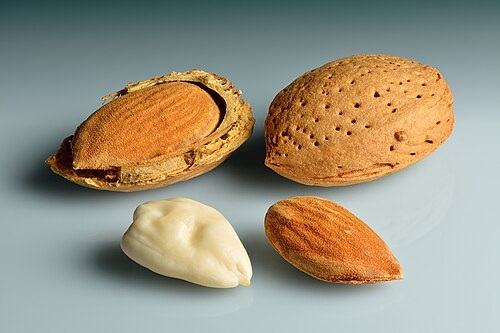

Image details
Illustrative photograph by Ivar Leidus. CC BY-SA 4.0. Cropped to fit.Vitamin D does not work in isolation. That is a sensible place to begin, but the word ‘cofactors’ is often used so loosely that it becomes a reason to sell almost any combination. The better question is which relationship is being described and what evidence shows that adding another nutrient helps.
Use the word carefully
Magnesium helps enzymes involved in vitamin D metabolism. Calcium provides material for bone mineralisation, while vitamin K is involved in activating particular proteins. These are different jobs: calling them all ‘cofactors’ can conceal what each nutrient actually does. A biological partnership does not, by itself, show that adding a bottle of each improves health. The magnesium trial discussed in this collection found changes in vitamin D metabolism that depended on starting concentrations. It supports investigating the interaction. It does not establish that every vitamin D user benefits from the same additional magnesium dose.
A longer ingredients list needs a better explanation
For each addition, ask what problem it is intended to solve, who was studied and what changed. When several ingredients are given together, the study may not isolate their separate contributions. A plausible pathway is useful background, not a complete clinical result. Nutrient relationships matter, but different relationships carry different evidence. ‘Works together’ is not enough to establish a universal supplement stack.
Sources
National Institutes of Health, Office of Dietary Supplements. Vitamin K: Health Professional Fact Sheet. Accessed 15 November 2026.
Related reading
Association of admission serum levels of vitamin D, calcium, Phosphate, magnesium and parathormone with clinical outcomes in neurosurgical ICU patients
Mean serum 25(OH)D was 21.1 ± 7.4 ng/mL.
Original paper ↗Read more →Association of dietary calcium, magnesium, and vitamin D with type 2 diabetes among US adults: National health and nutrition examination survey 2007 to 2014: A cross‐sectional study
Higher dietary intake of calcium (Ca), magnesium (Mg), and vitamin D has been associated with reduced risk of type 2 diabetes (T2DM), and a higher intracellular ratio of Ca to Mg leads to insulin resistance.
Original paper ↗Read more →Association of serum magnesium and calcium with metabolic syndrome: a cross-sectional study from the Qatar-biobank
In this study, we aim to investigate the association between the total serum concentrations of Ca, Mg and Ca: Mg ratio with the outcome of MetS.
Original paper ↗Read more →Calcium, magnesium, and vitamin D supplementations as complementary therapy for hypertensive patients: a systematic review and meta-analysis
This systematic review and meta-analysis examined relevant 6509 articles in PubMed, Scopus, Web of Science, and Cochrane CENTRAL up to October 2024.
Original paper ↗Read more →Divergent effects of sex and calcium/vitamin D supplementation on serum magnesium and markers of bone structure and function during initial military training
Serum Mg increased during IMT in females (0·06 ± 0·08 mmol/l) compared with males (: 0·02 ± 0·10 mmol/l; P < 0·001) and in those consuming Ca/vitamin D (0·05 ± 0·09 mmol/l) compared with placebo (0·001 ± 0·11 mmol/l; P = 0·015).
Original paper ↗Read more →Effect of calcium phosphate and vitamin D3 supplementation on bone remodelling and metabolism of calcium, phosphorus, magnesium and iron
The aim of the present study was to determine the effect of calcium phosphate and/or vitamin D3 on bone and mineral metabolism.
Original paper ↗Read more →Osteoprotegerin is strongly associated with calcium and magnesium in seminal fluid but not affected by denosumab
This study examines the correlation between the high levels of soluble-RANKL, osteoprotegerin (OPG), and minerals in seminal fluid and whether this can be influenced by denosumab.
Original paper ↗Read more →The dietary calcium-to-magnesium ratio and its association with glycemic control in type 2 diabetes: a cross-sectional study
This study investigated the association between the dietary Ca/Mg ratio, serum Ca and Mg levels, and glycemic biomarkers in individuals with T2DM.
Original paper ↗Read more →The effects of magnesium-zinc-calcium-vitamin D co-supplementation on biomarkers of inflammation, oxidative stress and pregnancy outcomes in gestational diabetes
This study was aimed to determine the effects of magnesium-zinc-calcium-vitamin D co-supplementation on parameters of inflammation and oxidative stress, and pregnancy outcomes among women with GDM.
Original paper ↗Read more →Vitamin D, calcium, phosphates, and magnesium serum level and bone mineral density in patients with type 1 diabetes
In this study, we evaluated these factors and the impact of vitamin D supplementation on vitamin D and BMD levels in T1DM patients.
Original paper ↗Read more →Vitamin D and Vitamin K in Calcium Handling, Bone and Vascular Physiology: Evidence Synthesis
Evidence synthesis integrating vitamin D, vitamin K-dependent proteins, calcium handling, bone outcomes and vascular calcification evidence.
Read more →Vitamin D, Vitamin K-Dependent Proteins and Calcium Handling: Full Study
Mechanistic evidence explaining how vitamin D influences calcium physiology while vitamin K activates osteocalcin and matrix Gla protein.
Read more →Vitamin D, Vitamin K-Dependent Proteins and Calcium Handling: Study Summary
A concise explanation of how vitamin D, osteocalcin, matrix Gla protein and vitamin K-dependent carboxylation interact in calcium physiology.
Read more →Why Vitamin D and Vitamin K Perform Different Jobs in Calcium Physiology
Why vitamin D and vitamin K interact in calcium physiology while performing different roles in absorption, protein expression and carboxylation.
Read more →Combined Vitamin D and Vitamin K Supplementation for Bone and Vascular Markers: Study Summary
A concise review of combined vitamin D and vitamin K trials for bone density, osteocalcin, MGP and vascular calcification.
Read more →Magnesium Status and Functional Vitamin D Response: Study Summary
A concise review of how magnesium status may influence vitamin D metabolism, circulating response and functional interpretation.
Read more →Magnesium and Vitamin D Metabolism, Activation and Metabolite Response: Study Summary
A concise review of human trials showing how magnesium can alter vitamin D metabolite handling and circulating 25(OH)D response.
Read more →Vitamin D and Calcium
Learn how vitamin D supports calcium regulation by influencing absorption, kidney handling, hormonal coordination, and wider physiological balance.
Read more →Vitamin D and Magnesium Function
Learn how magnesium supports vitamin D activation, transport, and receptor signalling.
Read more →How Vitamin D and Vitamin K Work Together in the Body
Explore how vitamin D and vitamin K coordinate calcium handling, bone mineralisation, and protein activation within integrated whole-body regulation.
Read more →Vitamin D, Calcium, Phosphate and Skeletal Demands in Pregnancy: Full Evidence Review
Evidence on vitamin D, calcium absorption, phosphate regulation and maternal bone during pregnancy, with clear human and animal study limits.
Read more →Original sources
Magnesium status and supplementation influence vitamin D status and metabolism: results from a randomized trial
Dai Q et al. 2018. The American journal of clinical nutrition.
Publication details
Dai Q et al. 2018. The American journal of clinical nutrition. 108(6):1249-1258. Magnesium status and supplementation influence vitamin D status and metabolism: results from a randomized trial. DOI: 10.1093/ajcn/nqy274. PMID: 30541089.
Vitamin K: Health Professional Fact Sheet
National Institutes of Health, Office of Dietary Supplements.
Publication details
National Institutes of Health, Office of Dietary Supplements. Vitamin K: Health Professional Fact Sheet. Accessed 15 November 2026.