Key Stories
Vitamin D in Older Adults
Vitamin D discussions about older adults often combine very different lives into one category. Someone active and living independently may have different circumstances from someone who is frail, housebound or living in residential care.
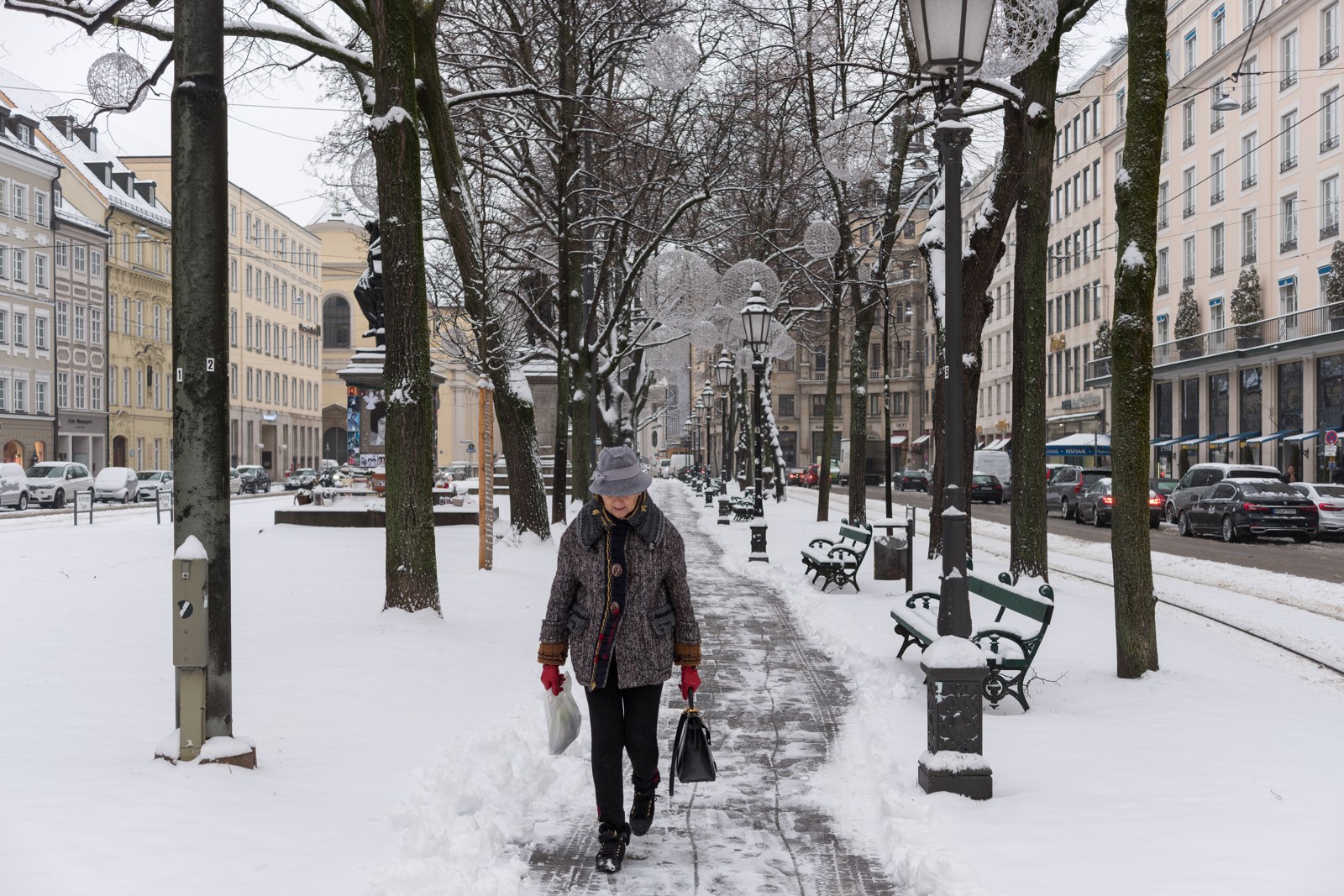

Image details
Illustrative photograph by Jules Verne Times Two. CC BY-SA 4.0. Cropped to fit.Vitamin D discussions about older adults often combine very different lives into one category. Someone active and living independently may have different circumstances from someone who is frail, housebound or living in residential care. That matters when reading research. A result from one population should not automatically be presented as the answer for all older people.
Look beyond age alone
Time outdoors, diet, mobility, existing illness and usual supplementation can change the starting situation. A study’s average age tells us something, but it does not describe all those differences. The VITAL fracture study did not find a significant reduction in fractures with additional vitamin D among generally healthy adults who had not been selected for deficiency or osteoporosis. That is not the same question as treating an established deficiency disorder.
Do not assume every schedule is harmless
Very large occasional doses have produced unwanted results in some trials. Convenience should not be treated as a reason to assume that an annual bolus is equivalent to a regular nutritional regimen. The population, starting status and dose schedule can change the meaning of an older-adult study. Age alone is not enough to interpret the result. Keep the person’s circumstances visible. Good coverage should distinguish correcting a shortage, general nutritional support and prevention of a specific outcome such as a fracture.
Sources
Endocrine Society. Vitamin D for the Prevention of Disease. Accessed 15 November 2026.
Related reading
Falls and potential therapeutic interventions among elderly and older adult patients with cancer: a systematic review
The aim of this study was to perform a systematic review for previous publications that have assessed the incidence, risk factors, and favorable procedures to prevent and manage falls among cancer survivors of elderly and older adults.
Original paper ↗Read more →“Falls in older people receiving home healthcare services at armed forces hospital Southern Region: prevalence, associated factors, and consequent injuries”
A total of 368 participants were selected using systematic random sampling.
Original paper ↗Read more →Arm circumference predicts 12-month mortality in older adults with hip fracture
This study compared the predictive value of these parameters for 1-year mortality in older adults hospitalized for hip fracture.
Original paper ↗Read more →Association of coexisting type 2 diabetes and DXA-defined low muscle mass with prevalent radiographic vertebral fracture in community-dwelling older adults: a cross-sectional study
Participants were classified into four mutually exclusive groups: neither condition, T2DM alone, dual-energy X-ray absorptiometry (DXA)-defined low muscle mass alone, or both conditions.
Original paper ↗Read more →Implementing STEADI for routine falls prevention of all older adults attending outpatient physical therapy: key partner perspectives
Participants included physical therapy providers (n = 16), physicians (n = 5), administrative staff (n = 3), patients (n = 10), and care partners (n = 10).
Original paper ↗Read more →Multidimensional dietary assessment and interpretable machine learning models predict the risk of prediabetes/diabetes and osteoporosis comorbidity in older adults
This study utilized data from NHANES cycles 2005 to 2010, 2013 to 2014, and 2017 to 2020, ultimately including 4,678 participants aged ≥65 years.
Original paper ↗Read more →Multidisciplinary care pathways for falls prevention in older adults: visualizing the needs of primary care-based health care professionals
The aim of this study was to gain insight into and visualize the needs of primary care-based health care professionals with regards to multidisciplinary falls prevention care using journey mapping.
Original paper ↗Read more →Osteoporosis, diabetes, and hypertension are major risk factors for mortality in older adults: an intermediate report on a prospective survey of 1467 community-dwelling elderly healthy pensioners in Switzerland
However, compared to the amount of information available on diabetes and cardiovascular disease, little is known about the direct impact of osteoporosis on general mortality in older age.
Original paper ↗Read more →Sex differences in impact of sarcopenia on falls in community-dwelling Korean older adults
This study aimed to investigate the sex differences in the impact of sarcopenia, defined by the Asian Working Group for Sarcopenia (AWGS), on falls in Korean older adults.
Original paper ↗Read more →Smoking, alcohol consumption, drug abuse, and osteoporosis among older adults: a cross-sectional study on PERSIAN cohort study in Fasa
Our study aimed to explore the correlation between smoking, alcohol consumption, and drug abuse among older adults and the incidence of osteoporosis.
Original paper ↗Read more →The effects of vitamin D supplementation on frailty in older adults at risk for falls
This secondary analysis aimed to examine the effects of vitamin D supplementation on frailty using data from the Study To Understand Fall Reduction and Vitamin D in You (STURDY).
Original paper ↗Read more →The interdisciplinary fracture liaison service improves health-related outcomes and survival of older adults after hip fracture surgical repair
Compared to U-CP, those in FLS-CP had higher initiation rate and up to 1-year adherence to secondary prevention of fragility fracture, including vitamin D and calcium (87.7% vs 36.9%; p.
Original paper ↗Read more →Vitamin D status and site-specific fracture pattern associations in older adults with fragility fractures: a cross-sectional analysis of 2543 patients
This study aimed to assess vitamin D status and investigate its variation across fracture sites in elderly patients with fragility fractures.
Original paper ↗Read more →A prospective cohort study of the risk factors for new falls and fragility fractures in self-caring elderly patients aged 80 years and over
This study aimed to prospectively analyze the risk factors for new falls and fragility fractures in self-caring elderly patients and to find suitable evaluation tools for community screening and follow-up interventions.
Original paper ↗Read more →Comparative study on the efficacy of menadione, zoledronic acid, and calcitriol in combination with PKP for the treatment of osteoporotic vertebral compression fractures in extremely elderly patients
Patients with osteoporotic vertebral compression fractures (OVCF) were assigned into 4 groups.
Original paper ↗Read more →Dual-energy X-ray absorptiometry-measured lean mass and clinical bone fracture in elderly Japanese men: the Fujiwara-kyo Osteoporosis Risk in Men (FORMEN) cohort study
We investigated the association between DXA-measured LM and clinical bone fractures in community-dwelling elderly Japanese men from the Fujiwara-kyo Osteoporosis Risk in Men (FORMEN) cohort study.
Original paper ↗Read more →Effects of intermittent overload doses of oral vitamin D3 on serum 25(OH)D concentrations and the incidence rates of fractures, falls, and mortality in elderly individuals: A systematic review and meta-analysis
We included 14 randomized controlled trials (RCTs) and employed Review Manager 5.4 for statistical analysis.
Original paper ↗Read more →Falls, fracture and frailty risk in multiple sclerosis: a Mendelian Randomization study to identify shared genetics
Our objective is to identify shared pleiotropic genetic effects and estimate the causal relationship between MS and musculoskeletal disorders.
Original paper ↗Read more →Lower preoperative vitamin D levels are associated with poor clinical outcomes in elderly patients with osteoporotic vertebral compression fractures after percutaneous vertebroplasty
This study evaluated the association between preoperative vitamin D status and postoperative pain and functional recovery following PVP.
Original paper ↗Read more →Overexpression of SNTG2, TRAF3IP2, and ITGA6 transcripts is associated with osteoporotic vertebral fracture in elderly women from community
The purpose of this study is to identify possible molecular markers associated with osteoporotic VFs in elderly women from community.
Original paper ↗Read more →Prevalence and associated factors of osteoarthritis and osteoporosis among Chinese adults aged 60 years or older: a multicenter cross-sectional study
This study aimed to investigate the prevalence of OA and OP and their associated factors among Chinese adults aged 60 years or older.
Original paper ↗Read more →Original sources
Supplemental Vitamin D and Incident Fractures in Midlife and Older Adults
LeBoff MS et al. 2022.
Publication details
LeBoff MS et al. 2022. The New England journal of medicine. 387(4):299-309. Supplemental Vitamin D and Incident Fractures in Midlife and Older Adults. DOI: 10.1056/nejmoa2202106. PMID: 35939577.
Annual high-dose oral vitamin D and falls and fractures in older women: a randomized controlled trial
Published in DOI: 10.1001/jama (2010).
Publication details
Sanders KM et al. 2010. JAMA. 303(18):1815-1822. Annual high-dose oral vitamin D and falls and fractures in older women: a randomized controlled trial. DOI: 10.1001/jama.2010.594. PMID: 20460620.
Vitamin D for the Prevention of Disease
Endocrine Society. Vitamin D for the Prevention of Disease.
Publication details
Endocrine Society. Vitamin D for the Prevention of Disease. Accessed 15 November 2026.