Key Stories
Vitamin D, Weight and Obesity
People with higher body weight often encounter claims that vitamin D is the missing ingredient in weight loss. That is a stronger claim than observing a relationship between body size and blood levels.
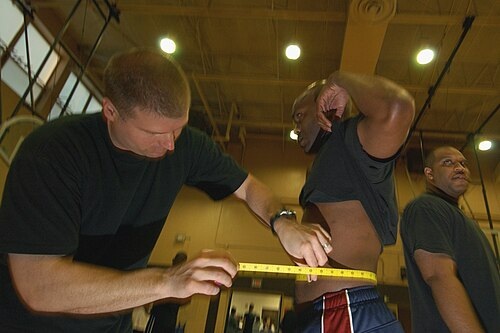

Image details
Illustrative photograph by Department of Defense. American Forces Information Service. Defense Visual Information Center. 1994. Public domain. Cropped to fit.People with higher body weight often encounter claims that vitamin D is the missing ingredient in weight loss. That is a stronger claim than observing a relationship between body size and blood levels. To test it fairly, we need to ask whether adding vitamin D changes weight beyond the effect of the same diet and activity programme.
A useful way to design the comparison
A double-blind trial followed 218 overweight or obese postmenopausal women aged 50 to 75 during a 12-month diet and exercise programme. Participants received either 2,000 IU of vitamin D3 daily or placebo. Average weight loss was 7.1 kg with vitamin D and 7.4 kg with placebo, with no statistically significant difference between the groups. Blood vitamin D levels rose with supplementation, but that did not translate into extra weight loss in this trial. Researchers consider body size when studying vitamin D response and distribution. That is not the same as demonstrating that vitamin D is a weight-loss treatment. A biological explanation for a measurement needs to stay separate from a commercial promise.
Look for more than selected success stories
A subgroup reaching a particular blood level may look different from other participants for several reasons. Such analyses can raise questions, but they should not replace the randomised comparison or become a universal target for weight loss. The relationship between body size and vitamin D deserves attention. It does not, by itself, establish that a supplement causes weight loss.
Sources
National Institutes of Health, Office of Dietary Supplements. Vitamin D: Health Professional Fact Sheet. Accessed 15 November 2026.
Related reading
Cardiometabolic Indices after Weight Loss with Calcium or Dairy Foods: Secondary Analyses from a Randomized Trial with Overweight/Obese Postmenopausal Women
This analysis included blood pressure (BP), and serum triglycerides, lipids (including apoproteins Apo1 and ApoB), adipokines, and C-reactive protein in n = 97 participants who finished with complete data points.
Original paper ↗Read more →Effect of vitamin D supplementation in combination with weight loss diet on lipid profile and sirtuin 1 in obese subjects with vitamin D deficiency: a double blind randomized clinical trial
Forty-four obese subjects with vitamin D deficiency were randomly assigned in a randomized clinical trial to receive either a weight reduction diet supplemented with 50000IU vitamin D3 pearl (n = 22) or placebo (n = 22) once weekly for 12 weeks.
Original paper ↗Read more →Role of Calcium and Low-Fat Dairy Foods in Weight-Loss Outcomes Revisited: Results from the Randomized Trial of Effects on Bone and Body Composition in Overweight/Obese Postmenopausal Women
We aimed to investigate weight-loss-related outcomes during intervention with low-fat dairy foods or Ca + vitamin D supplements, both as complements to hypocaloric diets.
Original paper ↗Read more →A Pilot Randomized Controlled Trial of a Partial Meal Replacement Preconception Weight Loss Program for Women with Overweight and Obesity
The PreBabe Pilot study was a randomised controlled pilot trial to assess the feasibility, acceptability and potential weight loss achieved using a commercial online partial meal replacement program, (MR) vs.
Original paper ↗Read more →Bone Health Following Lifestyle‐Induced Weight Loss in Individuals With Overweight/Obesity: A Narrative Review
Although weight loss has many health benefits for people with overweight/obesity, its potential negative impact on bone health needs to be considered.
Original paper ↗Read more →Effect of weight loss intervention on fat metabolism including adipocytokines and enzymes in children with simple obesity
To investigate short-term changes in adipocytokines and fat-metabolism enzymes after a diet and exercise intervention in children with simple obesity.
Original paper ↗Read more →Serum TSH, 25(OH) D and phosphorus levels predict weight loss in individuals with diabetes/prediabetes and morbid obesity: a single-center retrospective cohort analysis
Compared with baseline, in the median 22 months of follow-up, the whole study group lost 5.1% of their baseline body weight.
Original paper ↗Read more →A Potential Tool for Clinicians; Evaluating a Computer-Led Dietary Assessment Method in Overweight and Obese Women during Weight Loss
The aim of this study was to validate a computer-led dietary assessment method in overweight/obese women.
Original paper ↗Read more →A Randomized Double-Blind Placebo-Controlled Clinical Study to Evaluate the Effect on the Weight of a Medical Device with Polyglucosamine L112 in a Group of Overweight and Obese Subjects
Objective.
Original paper ↗Read more →Association between geospatial disparities in food security with weight loss and nutritional outcomes of metabolic surgery
Postoperative weight change was evaluated with quadratic growth mixture models and stratified by surgery type.
Original paper ↗Read more →Comparative seven year outcomes of RYGB and SADI-S as revisional procedures for weight recurrence regain after sleeve gastrectomy: weight loss trajectory, reflux control, and metabolic safety
Sleeve gastrectomy (SG) is widely performed, yet 20 to 50% of patients experience insufficient weight loss or weight regain, leading to revisional surgery.
Original paper ↗Read more →Effects of body fat mass and therapeutic weight loss on vitamin D status in privately owned adult dogs
Low vitamin D status occurs in dogs with inflammatory conditions, but its relationship with obesity has not been investigated.
Original paper ↗Read more →Effects of licorice extract in combination with a low-calorie diet on obesity indices, glycemic indices, and lipid profiles in overweight/obese women with polycystic ovary syndrome (PCOS): a randomized, double-blind, placebo-controlled trial
So, we investigated the effect of licorice on obesity indices, glycemic indices, and lipid profiles in women with PCOS.
Original paper ↗Read more →Gene expression in breast and adipose tissue after 12 months of weight loss and vitamin D supplementation in postmenopausal women
Vitamin D may affect these pathways but its effect on gene expression in different tissues has not been examined.
Original paper ↗Read more →Maternal obesity and baseline vitamin D insufficiency alter the response to vitamin D supplementation: a double-blind, randomized trial in pregnant women
The secondary aim was to investigate the influence of maternal BMI (in kg/m2) on the response of the primary outcomes.
Original paper ↗Read more →Preventing calcium and vitamin D deficiencies following weight loss and metabolic surgery
Higher PTH levels following RYBP, compared to SG, may imply we are undertreating patients who are inherently subjected to a greater degree of malabsorption and underlying nutritional deficiencies.
Original paper ↗Read more →The effect of calcium and vitamin D supplementation on obesity in postmenopausal women: secondary analysis for a large-scale, placebo controlled, double-blind, 4-year longitudinal clinical trial
The purpose of the study is to detect the effect of calcium supplementation on indices of obesity and body composition.
Original paper ↗Read more →Vitamin D supplementation and exercise for improving physical function, body composition and metabolic health in overweight or obese older adults with vitamin D deficiency: a pilot randomized, double-blind, placebo-controlled trial
Vitamin D supplementation may have non-skeletal health benefits and enhance exercise responsiveness, particularly in those with low vitamin D levels.
Original paper ↗Read more →Vitamin D supplementation improves SIRT1, Irisin, and glucose indices in overweight or obese type 2 diabetic patients: a double-blind randomized placebo-controlled clinical trial
The aim was to assess the effects of vitamin D supplementation on SIRT1, irisin, and IR in overweight/obese type 2 diabetes (T2D) patients.
Original paper ↗Read more →Body weight and 25-hidroxyvitamin D follicular levels: a prospective study of women submitted to in vitro fertilization
This study aimed to assess the FF levels of 25(OH)D3 in women submitted to ICSI and correlate these levels with the different body weight and BMI values observed in the enrolled cohort.
Original paper ↗Read more →Effects of probiotic/synbiotic supplementation on body weight in patients with diabetes: a systematic review and meta-analyses of randomized-controlled trials
The aim of the present study was to assess the effect of probiotic/synbiotic supplementation on anthropometric measures in adults with diabetes, independent of body weight.
Original paper ↗Read more →Original sources
Vitamin D3 supplementation during weight loss: a double-blind randomized controlled trial
Mason C et al. 2014. The American journal of clinical nutrition.
Publication details
Mason C et al. 2014. The American journal of clinical nutrition. 99(5):1015-1025. Vitamin D3 supplementation during weight loss: a double-blind randomized controlled trial. DOI: 10.3945/ajcn.113.073734. PMID: 24622804.
Vitamin D: Health Professional Fact Sheet
National Institutes of Health, Office of Dietary Supplements.
Publication details
National Institutes of Health, Office of Dietary Supplements. Vitamin D: Health Professional Fact Sheet. Accessed 15 November 2026.